
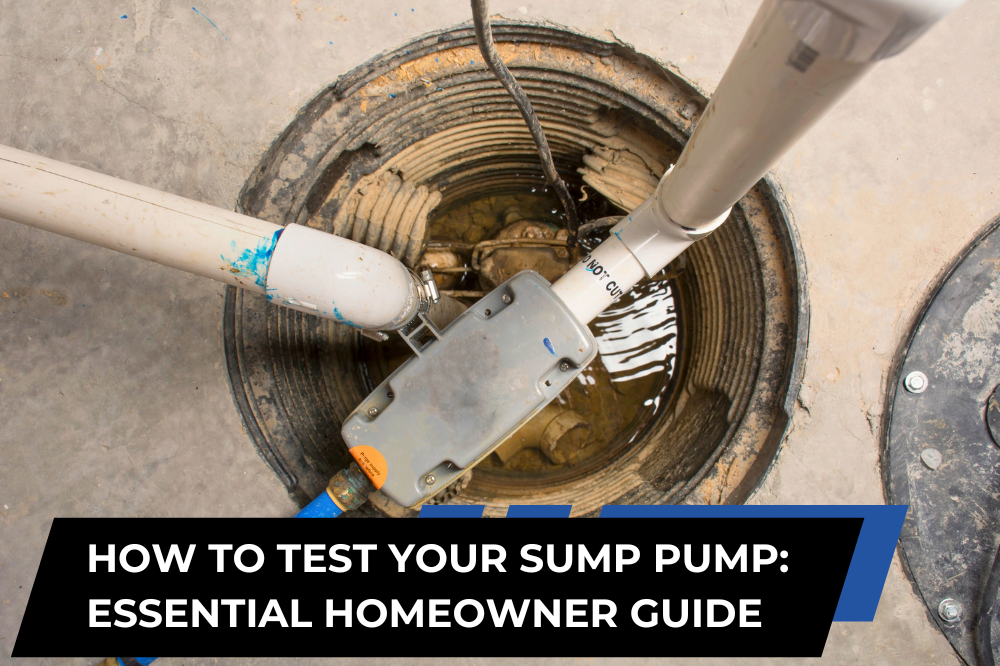
How to test a sump pump is an important question for homeowners who want to protect their basements from flooding.
A sump pump helps remove groundwater that collects beneath your home, especially during heavy rainfall and spring snowmelt.
However, even a pump that appears to work normally can develop problems that prevent it from removing water effectively.
Fortunately, you can perform a basic test to check whether your system starts, pumps water, and shuts off correctly.
Regular testing also helps you identify issues with the float switch, discharge pipe, and backup system before they cause costly water damage.
In this guide, we explain how to test your equipment safely, recognize common warning signs, and determine when professional plumbing assistance may be necessary.
What Is a Sump Pump and Why Should You Test It?
A sump pump is a device installed in a pit, usually in a basement or crawl space.
It collects groundwater and pumps it away from your home’s foundation to help reduce the risk of basement flooding.
When water enters the pit and reaches a predetermined level, a float switch activates the pump.
The motor then drives water through a discharge pipe to an appropriate drainage location. Once the water level drops, the pump should shut off.
However, several components must work together for this process to succeed.
Why Regular Testing Matters
Testing your system helps you identify potential problems before groundwater enters your basement.
For example, a faulty float switch may prevent the pump from starting, while a blocked discharge line can stop water from leaving the pit.
Regular testing can help you identify:
- A float switch that sticks or fails to activate.
- A pump motor that does not start or remove water effectively.
- A discharge pipe that is blocked, damaged, or frozen.
- A check valve that allows water to flow back into the pit.
- A backup system that may fail during a power outage.
Therefore, a quick inspection and operational test can help you catch developing issues before the next major rainfall.
When Should You Test Your Sump Pump?
The best time to test your system is before you need it to manage large amounts of groundwater.
Waiting until water enters your basement can leave you with limited time to arrange repairs.
Consider testing your equipment under the following circumstances:
- Every three months: Use quarterly testing as a practical starting point, unless the manufacturer’s instructions recommend a different schedule.
- Before spring snowmelt: Rising groundwater levels can put additional pressure on your drainage system.
- Before periods of heavy rainfall: Confirm that the pump and discharge line are ready for increased water flow.
- After a power outage: Check that the pump operates normally and that any backup equipment remains functional.
- After cleaning or repairs: Run a test cycle to confirm that the system works correctly.
Additionally, homes with recurring basement moisture or high groundwater levels may require more frequent inspections.
Follow the manufacturer’s maintenance recommendations and adjust your schedule to suit your home’s conditions.
How to Test a Sump Pump Step by Step
You can perform a basic operational test using a few simple steps.
However, always prioritize electrical safety and follow the manufacturer’s instructions for your particular model.
Step 1: Inspect the Sump Pit and Pump
Start by examining the pump and the surrounding area. Look for visible damage, loose pipes, excessive sediment, and debris that could interfere with operation.
Check that the pump sits upright and that the sump pit is free from obstructions.
Also, make sure the float switch has enough room to move without catching on the pit wall or nearby plumbing.
Keep the surrounding area dry, particularly around electrical connections.
If you notice exposed wires, wet electrical components, or signs of electrical damage, stop and contact a qualified professional.
Step 2: Check the Float Switch
The float switch tells the pump when to turn on and off. If it becomes stuck, the pump may fail to activate or continue running longer than necessary.
Inspect the switch for visible obstructions and confirm that it can move freely. Do not force the mechanism or reach into standing water around electrical equipment.
Some models use vertical floats, while others use tethered switches or electronic sensors. Consequently, the testing procedure may differ depending on your equipment.
Step 3: Add Water to the Sump Pit
One of the simplest ways to check the system is to introduce clean water into the sump pit.
Using a bucket, slowly add water until the level reaches the pump’s activation point. Watch the float switch as the water rises.
The pump should activate when the water reaches its designated trigger level. However, avoid adding too much water, as an overflowing pit can damage your basement.
Only perform this test if the installation is safe, electrical components are dry, and the manufacturer’s instructions permit it.
Never run a pump dry if its manufacturer prohibits dry operation.
Step 4: Confirm That the Pump Removes Water
Once the pump activates, listen to the motor and observe the water level.
A properly functioning system should begin removing water from the pit.
The water level should fall, and the pump should eventually shut off when the float switch reaches its stopping point.
Pay attention to unusual noises, excessive vibration, or repeated starting and stopping.
Also, remember that hearing the motor run does not necessarily mean the pump is moving water effectively.
If the motor runs but the water level does not decrease, the pump may have a mechanical problem or a blocked discharge line.
Step 5: Inspect the Discharge Pipe and Check Valve
The discharge pipe carries water away from your foundation.
Therefore, checking the outlet is just as important as confirming that the pump starts.
Where accessible, inspect the pipe for visible leaks, damage, or obstructions.
Confirm that discharged water reaches its intended destination and does not flow back toward your home’s foundation.
The check valve helps prevent water from returning to the sump pit after the pump shuts off.
If water flows back repeatedly, the valve may require inspection or replacement.
During freezing weather, also check for signs of ice or blockage in accessible discharge piping.
Never attempt to clear a frozen line using unsafe heating methods or by handling wet electrical equipment.
After completing the test, confirm that the water level has returned to normal and that the pump has stopped running.
How to Test a Battery Backup Sump Pump
A backup system provides additional protection when the primary pump cannot operate, particularly during a power outage.
However, having a backup installed does not guarantee that it will work when needed.
Start by checking the manufacturer’s instructions for the appropriate testing procedure. Many systems include a test button or a dedicated method for checking the backup pump.
Next, inspect the battery connections and any charge or warning indicators. Replace or service the battery when necessary, following the manufacturer’s recommendations.
Where the manufacturer provides a safe operational test, confirm that the backup pump activates and removes water from the pit. Some systems use a separate battery-powered pump, while others rely on water pressure.
Never assume that an indicator light alone proves the backup system can remove water. If you are unsure how to test the equipment safely, ask a qualified plumber to inspect it.
Signs Your Sump Pump Is Not Working Properly
Even if your pump activates, certain warning signs can indicate that something is wrong.
Watch for these common problems:
- The pump will not start: A power issue, faulty float switch, or damaged motor may prevent activation.
- The motor runs, but water remains in the pit: A blocked pipe, damaged impeller, or failing pump may prevent effective water removal.
- The pump runs continuously: A stuck float switch, excessive groundwater inflow, or an undersized pump could be responsible.
- The pump makes unusual noises: Persistent humming, grinding, or rattling may indicate mechanical wear or debris.
- Water returns to the pit: A faulty check valve may allow discharged water to flow backward.
- The basement remains damp: The discharge system may be ineffective, or another source of water intrusion may need investigation.
Although some problems involve simple obstructions, others require professional diagnosis.
Therefore, do not ignore recurring symptoms simply because the pump still turns on.
Common Testing Mistakes to Avoid
A basic test can reveal valuable information, but incorrect testing may damage equipment or create safety hazards.
Avoid these common mistakes:
- Running the pump without sufficient water: Follow the manufacturer’s instructions to avoid damaging a pump that cannot operate dry.
- Overfilling the pit: Add water gradually and monitor the level throughout the test.
- Forcing the float switch: Allow the mechanism to move naturally rather than bending or pulling it.
- Ignoring the discharge pipe: Confirm that water leaves the system instead of checking only the motor.
- Handling wet electrical connections: Keep electrical components dry and never touch plugs or wiring with wet hands.
- Forgetting the backup system: Test the backup separately according to its manufacturer’s instructions.
- Ignoring repeated cycling: Frequent starts and stops may indicate a problem that needs attention.
If you notice burning smells, exposed wiring, repeated breaker trips, or water near electrical components, stop the test.
Contact a qualified professional rather than attempting electrical repairs yourself.
How to Maintain Your Sump Pump Between Tests
Regular maintenance helps keep your equipment in good condition and may reduce the likelihood of unexpected failure.
Between operational tests, follow these basic maintenance practices:
1. Keep the pit clear. Remove accessible debris when it is safe to do so and follow the manufacturer’s cleaning instructions.
2. Inspect the float switch. Make sure the mechanism can move freely without catching on pipes or the pit walls.
3. Check visible piping. Look for leaks, damage, and signs of blockage in the discharge line.
4. Maintain the backup battery. Check its condition, charging system, and replacement requirements according to the manufacturer’s guidance.
5. Keep the area accessible. Avoid storing items where they could obstruct access to the pump.
6. Record unusual behaviour. Note recurring noises, frequent cycling, or changes in pumping performance.
In addition, arrange professional service when your system shows signs of wear or fails an operational test.
Preventive maintenance is especially valuable before seasonal increases in groundwater levels.
When Should You Call a Professional Plumber?
Basic testing can help you identify potential problems, but it cannot diagnose every mechanical or drainage issue.
Contact a professional plumber if your pump fails to start, cannot lower the water level, or continues running abnormally.
Professional assistance is also advisable when the system makes persistent mechanical noises, the backup pump fails, or the discharge line appears blocked or frozen.
Furthermore, seek help if the pump repeatedly trips a breaker or you notice electrical hazards.
Do not continue testing equipment that may be unsafe.
For homeowners in Toronto and the Greater Toronto Area, spring snowmelt and heavy rainfall can increase the demand on basement drainage systems.
Having a professional inspect an unreliable pump before these conditions develop can help you identify problems early.
Frequently Asked Questions
Can I test a sump pump without adding water?
Some models have manufacturer-approved test controls, but these may not verify every part of the system.
Adding water to the pit is a common way to check the float switch and pumping cycle. Always follow the instructions for your particular model.
How long should a sump pump take to empty the pit?
There is no universal time because performance depends on the pit size, pump capacity, discharge height, and incoming water volume.
The important thing is to confirm that the pump removes water effectively and shuts off as expected.
Is it normal for a sump pump to run during dry weather?
Yes. Groundwater can collect in the pit even when it has not rained recently.
However, continuous operation or unusually frequent cycling may indicate high groundwater levels, a drainage issue, or a problem with the pump.
Can a sump pump run without actually pumping water?
Yes. A running motor does not guarantee effective water removal.
A damaged impeller, an obstruction, or another mechanical issue may prevent the pump from discharging water properly.
Arrange an inspection if the water level does not fall during testing.
How often should a sump pump be replaced?
Replacement timing depends on the pump’s quality, age, workload, maintenance history, and condition.
Follow the manufacturer’s guidance and consider replacement if the equipment repeatedly fails, becomes unreliable, or requires frequent repairs.
Do I need a battery backup sump pump in Ontario?
A backup can provide valuable protection when a power outage occurs during heavy rainfall or spring snowmelt.
Whether you need one depends on your home’s flooding risk, power reliability, and existing drainage system.
A plumber can help you assess suitable options.
Protect Your Basement With True Service Plumbing
When it comes to sump pump concerns in Toronto and the GTA, True Service Plumbing helps residential and commercial customers address plumbing problems with professional care.
Whether your pump fails a test, makes unusual noises, or struggles to remove water, our team can help you explore the next steps.
Concerned about your sump pump or basement drainage? Contact True Service Plumbing for further information or assistance with your plumbing needs.
Don’t wait for water to become a bigger problem. Let our team help you keep your plumbing system operating as it should.