
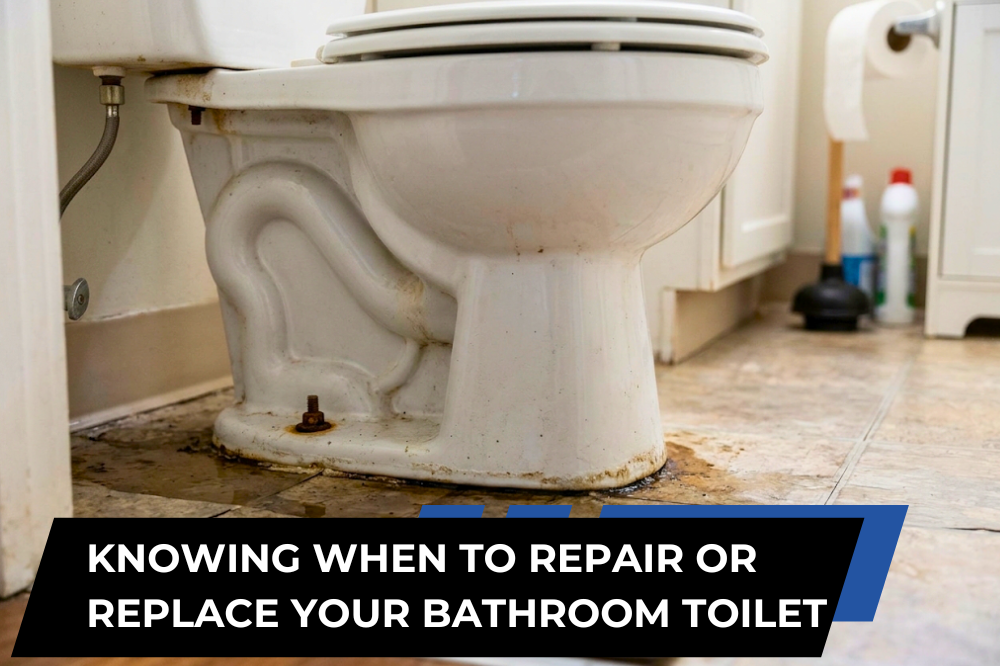
Understanding what to know when replacing a toilet can help you avoid buying the wrong fixture, overlooking a leak, or paying for work twice.
Maybe your toilet clogs often. Perhaps water collects around the base, or you want a more comfortable model during a bathroom renovation.
Whatever your reason, a successful upgrade starts before the old toilet leaves the room.
The good news? You do not need to become a plumbing expert. Instead, focus on a few practical decisions: whether replacement makes sense, what fits your bathroom, and what condition the plumbing is in.
This guide walks Toronto and GTA homeowners through those decisions so you can plan your next step with confidence.
Start With the Problem You Want to Solve
Before shopping, identify why your current toilet disappoints you.
Otherwise, you could replace a working fixture while leaving the actual problem untouched.
When a Repair May Be Enough
A running toilet often needs a replacement flapper, fill valve, or another internal part.
Similarly, a loose handle or leaking supply connection may require a straightforward repair.
Water around the base also needs diagnosis. It could come from a failed seal, a tank connection, condensation, or a nearby source.
Therefore, avoid assuming that every puddle means you need a new toilet.
Ask your plumber to explain the cause and compare the repair with replacement.
If the bowl and tank remain sound, a repair may be the sensible choice.
When Replacement Deserves Consideration
Cracked porcelain, repeated repairs, and poor flushing performance can make replacement worthwhile.
In addition, you might want a different seat height or a model that uses less water.
However, recurring clogs deserve extra attention. A blockage farther down the drain can affect a brand-new toilet too.
If other fixtures drain slowly or you hear gurgling, have the drainage system assessed before buying.
If a crack leaks, stop using the toilet and arrange service.
Shut off its water supply if you can do so safely, and avoid forcing a stuck valve.
Measure First, Shop Second
A toilet can look perfect online and still fail to fit your bathroom.
Consequently, measurements should come before choosing a finish or flushing feature.
Confirm the Rough-In
For a typical floor-mounted toilet, the rough-in is the distance from the finished wall behind the toilet to the centre of its drain outlet.
The floor mounting bolts usually help you locate that centreline.
Measure from the wall surface, rather than the front of the baseboard.
Then compare your measurement with the exact model’s specification sheet.
A 12-inch rough-in is common, but other sizes exist.
Therefore, never assume that every replacement will fit.
Concealed mounting hardware and unusual layouts may require a plumber’s help to confirm the measurement.
Check Clearance Around the Bowl
Next, measure the available width and how far the toilet can project into the room.
Open the bathroom door and nearby cabinet doors to check for interference.
Round bowls often suit compact spaces, while elongated bowls offer a different seating shape and usually extend farther forward.
However, overall dimensions vary between models, so check the drawings.
Also, leave usable access to the shutoff valve.
A broad, skirted base may interfere with an existing valve or supply connection even when the rough-in matches.
Choose a Height That Suits Your Household
A taller toilet may make sitting and standing easier for some adults.
Conversely, children and shorter users may find a lower seat more comfortable.
Compare the finished seat height, including the seat itself.
If accessibility matters, discuss your household’s needs with the installer before ordering.
Pick Features You Will Appreciate Every Day
Once you confirm the fit, compare the features that affect cleaning, flushing, and future repairs.
One-Piece, Two-Piece, or Wall-Mounted?
A two-piece toilet has a separate tank and bowl.
These models offer many replacement options, although the tank-to-bowl connection adds another joint to maintain.
A one-piece toilet combines the tank and bowl into one fixture.
As a result, it removes that joint and can simplify cleaning around the connection. However, its weight may make handling more demanding.
Wall-mounted toilets use a different support and plumbing arrangement.
Consequently, switching from a standard floor-mounted model can involve opening walls and changing the installation substantially.
For a straightforward project, ask which models suit your existing setup with the fewest changes.
Balance Water Efficiency With Performance
Look at the rated litres per flush and credible performance information.
For example, the EPA’s WaterSense programme independently certifies toilets for water efficiency and flushing performance.
Compare single-flush and dual-flush models according to how your household will use them.
Also, check whether replacement fill valves, flush components, and seats are readily available.
A lower water rating does not tell the whole story.
You also want reliable flushing, simple controls, and parts you can obtain when maintenance becomes necessary.
Check What the Purchase Includes
Before checkout, confirm whether the toilet includes:
- A compatible seat and lid.
- Mounting bolts and covers.
- The required installation seal.
- Any model-specific mounting parts.
Some packages include these items, while others require separate purchases.
Therefore, share the product details with your installer before installation day.
Understand What Can Change the Installation Cost
The fixture price is only one part of the budget. Labour, removal, disposal, materials, and repairs can all affect the total.
For that reason, request a written quote that explains what the standard installation includes.
Also, ask whether applicable taxes and old-toilet disposal appear in the total.
Hidden Problems Beneath the Base
The flange connects the toilet to the drain and provides its mounting point.
Once the old toilet comes off, the installer can inspect its condition and position.
A cracked, loose, corroded, or poorly positioned flange may need correction before the new fixture goes in.
Similarly, water-damaged flooring may require additional work.
New flooring can also change the height relationship between the finished floor and flange.
Therefore, tell your plumber about recent tile or flooring work.
Covering up a problem beneath a new fixture can lead to another leak.
Addressing it during replacement gives the installation a sound foundation.
Supply Connections and Drain Problems
An old shutoff valve may leak or fail to close fully.
Likewise, a damaged or unsuitable supply connector may need replacement.
Ask your installer to inspect these components rather than assuming they can stay.
However, their condition and compatibility should guide the decision.
Moving the toilet to another location adds further complexity because the drain, venting, and water supply may need changes.
As a result, relocation needs its own assessment and quote.
Decide Who Should Handle the Work
A confident homeowner may be able to complete a straightforward replacement with suitable tools, help lifting, and the manufacturer’s instructions.
Nevertheless, the work involves more than tightening a few bolts.
You must isolate the water, handle heavy porcelain, inspect the mounting area, install a compatible seal, and test the finished connections.
In addition, overtightening hardware can damage the fixture.
Professional help becomes especially useful when:
- The existing toilet rocks or leaks repeatedly.
- The shutoff valve does not work.
- The flange or floor needs repair.
- The drain clogs frequently.
- The replacement uses a different mounting arrangement.
- You plan to relocate the fixture.
If you live in a condo, check building management requirements before scheduling work.
For example, access arrangements or a building water shutdown may affect the appointment.
Ultimately, choose someone who can assess the plumbing and explain any additional work before proceeding.
Prepare Your Bathroom Before the Appointment
A little preparation helps the installation run smoothly.
First, clear a path from the entrance to the bathroom.
Then remove rugs, toiletries, and objects around the toilet.
Keep children and pets away from the work area, and identify the household’s main water shutoff in case it is needed.
If you supplied the fixture, check that the delivered model matches your order and has no obvious shipping damage.
Also, confirm that the required parts have arrived.
Finally, arrange access to another toilet if possible.
A routine replacement can become a longer job when removal exposes damage.
Know What Happens During Installation
Although models differ, a typical replacement follows a familiar sequence:
- Shut off the water, drain the fixture, and disconnect the supply.
- Remove the old toilet and existing seal.
- Inspect the flange, floor, and supply connections.
- Complete necessary repairs and prepare the mounting area.
- Fit a new compatible seal and position the toilet.
- Secure the fixture, reconnect the supply, and test for leaks.
The installer should follow the toilet and seal manufacturers’ instructions throughout.
In particular, the fixture must sit securely without relying on excessive bolt pressure.
A straightforward job may fit within one appointment.
However, drain repairs, damaged flooring, or missing parts can extend the work.
Before the installer leaves, ask when you can use the toilet.
Any waiting period depends on the installation materials and their instructions.
Check the Finished Work
Once installation is complete, check that the toilet feels stable and the seat is secure.
Then flush several times and watch the tank refill.
Look for moisture around the supply valve, connector, tank joints, and base.
Also, confirm that the fill valve stops running after the tank fills.
If you notice a leak or movement, contact the installer promptly.
Avoid tightening bolts yourself without guidance because too much force can crack porcelain.
Keep the model number, receipt, and warranty information somewhere accessible.
That way, ordering a replacement part later becomes easier.
Common Questions Before You Commit
Do You Need a New Seal?
Yes. A replacement installation needs a new compatible toilet-to-drain seal. A compressed wax ring should not be reused.
Wax and wax-free products have different installation requirements.
Therefore, let the flange position, toilet design, and product instructions guide the choice.
Will Replacement Solve Every Clog?
No. A better-performing fixture may help when the old toilet causes the problem.
However, it cannot clear an obstruction or repair a defect farther along the drain.
If clogs keep returning, arrange a diagnosis before committing to replacement.
How Should You Dispose of the Old Toilet?
Confirm whether your installer includes removal.
Otherwise, check current municipal disposal instructions for your address before setting porcelain out for collection.
Because Toronto and surrounding GTA municipalities can have different arrangements, avoid assuming that the same rules apply everywhere.
Toilet Replacement Services With True Service Plumbing
Knowing what to know when replacing a toilet helps you choose a suitable fixture and spot questions worth asking before installation.
For help with toilet repairs, replacement, or related drainage concerns, contact True Service Plumbing.
We serve residential and commercial customers across Toronto and the surrounding GTA.
Whether you have a leaking base, repeated clogs, or plans for a bathroom upgrade, our team can assess the issue and explain the next steps.
Contact True Service Plumbing today for more information or assistance with your toilet replacement.