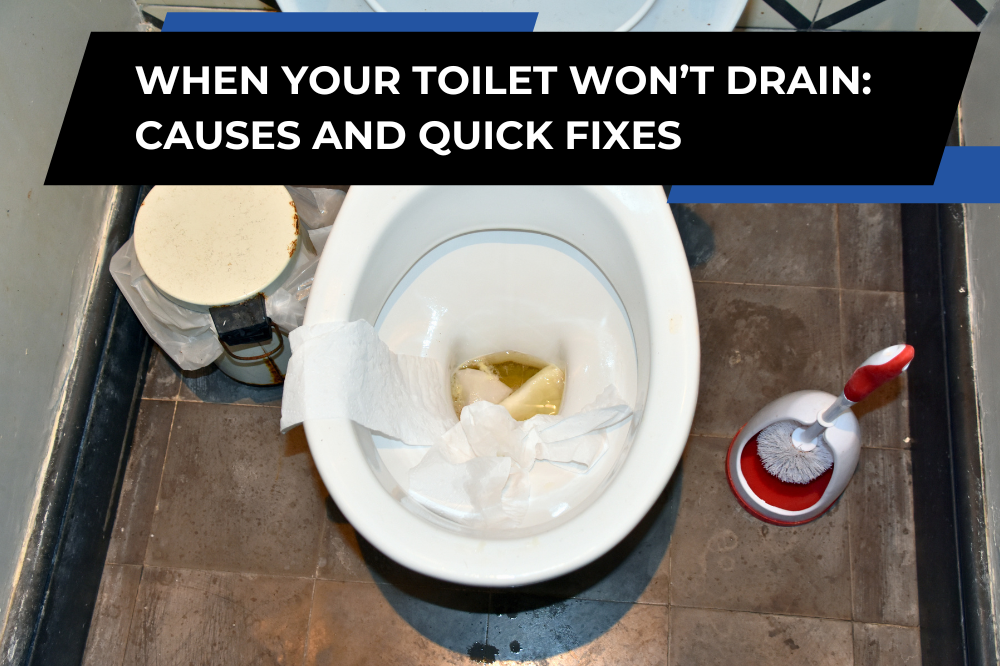
Toilet water wont go down after a flush? A slow-draining or blocked toilet can be frustrating, especially when the bowl starts filling close to the rim.
The good news is that many toilet clogs come from a simple obstruction that homeowners can address safely.
However, repeated blockages, bubbling drains, or water backing up in more than one fixture may point to a larger plumbing issue.
The key is to avoid making the problem worse. In this guide, you’ll learn what causes a toilet to stop draining, what to do first, how to try a safe fix, and when it’s time to call a licensed plumber.
What Causes a Toilet to Stop Draining?
A toilet relies on a clear passage through its built-in trap and the drainpipe beyond it.
When something blocks that route, water and waste may move slowly, rise in the bowl, or remain in place after flushing.
The symptom alone does not always reveal exactly where the obstruction sits, but a few common causes can help narrow it down.
1. Too Much Toilet Paper or Waste
Excess toilet paper is one of the most common reasons a toilet becomes blocked.
Large amounts may bunch together before they have time to break down and move through the pipe.
In addition, waste can collect behind an existing partial blockage, making a minor restriction worse over time.
2. Items That Shouldn’t Be Flushed
Wipes, paper towels, cotton swabs, dental floss, sanitary products, and similar items can catch inside the toilet or drain line.
Some products are marketed as flushable, but they may not break down as readily as toilet paper.
As a result, they can contribute to stubborn clogs and sewer blockages. Put these items in the appropriate bin instead of flushing them.
3. An Object Stuck in the Toilet Trap
Small toys, air freshener parts, hygiene products, and other objects can become lodged in the curved passage inside the toilet.
A plunger may not dislodge a solid item, and forcing it farther into the pipe can make removal more difficult.
If you suspect a foreign object is stuck, stop repeated flushing and consider professional help.
4. A Weak Flush or Low Water Level
Sometimes the toilet is not fully blocked. A low tank water level, a faulty flapper, mineral buildup around the rim jets, or a problem with the flush mechanism can reduce flushing power.
The bowl may swirl without carrying waste away, or it may need more than one flush.
Repeated flushing is not a good workaround; it can waste water and may cause an overflow if a partial clog is also present.
5. A Blocked Drain or Main Sewer Line
If more than one toilet or drain is slow, or you hear gurgling from nearby fixtures, the problem may be farther down the drainage system.
Tree roots, damaged pipes, accumulated debris, or a blockage in the sewer line can restrict wastewater flow.
These problems usually need a plumber to diagnose and clear safely.
What to Do First When the Bowl Won’t Empty
Before reaching for a tool, prevent an overflow. The first few minutes matter because a bowl that is already full has very little room for additional water.
1. Stop flushing. Do not keep pressing the handle to see whether the next flush works. Additional water may spill over the rim.
2. Check the water level. If it is rising or close to overflowing, leave the toilet alone and wait for the level to settle. Do not pour more water into the bowl.
3. Keep the area safe. Move bath mats and stored items away from the toilet, and keep children and pets clear of any wastewater
4. Look for wider symptoms. Check whether a shower, bathtub, sink, or another toilet is draining slowly or making bubbling sounds. Avoid using other fixtures if you suspect a sewer backup.
5. Think about what went down. If a toy, wipe, sanitary product, or other object may have been flushed, avoid forcing it deeper with repeated plunging.
If wastewater is spilling onto the floor, or several fixtures are backing up, contact a plumbing professional promptly.
Where a sewer backup may be affecting your basement or the wider sewer service, Toronto homeowners can also contact the City at 311 for guidance and investigation.
How to Unclog a Toilet Safely
When the water has settled below the rim and only one toilet appears to be affected, a correctly used toilet plunger is a sensible first step.
Do not attempt this method if you have poured a chemical drain cleaner into the bowl, because plunging can splash corrosive liquid.
Step 1: Use the Right Plunger
A flange plunger, which has an extended rubber sleeve at the bottom, is designed to fit into a toilet outlet. A flat sink plunger may not create a reliable seal.
Put on rubber gloves, place old towels around the base if needed, and make sure the plunger cup is covered by water without allowing the bowl to overflow.
Step 2: Create a Firm Seal
Place the plunger over the outlet so it covers the opening completely.
Press down gently at first to push out trapped air, then use steady, controlled strokes while keeping the seal in place.
Avoid sharp, forceful movements that splash water onto the floor.
Step 3: Check Whether the Blockage Clears
After several controlled strokes, lift the plunger slowly. If the water begins to drain, allow the bowl to empty before testing the flush.
If the level rises, stop and give it time to settle. Do not flush again while the bowl remains high.
If the toilet does not improve after a careful attempt or two, stop rather than continuing to force the blockage.
A toilet auger may help with some obstructions, but improper use can scratch porcelain or push an object farther into the line.
When you are unsure what is causing the problem, a plumber can choose the appropriate tool.
What Not to Do When a Toilet Is Clogged
Some quick fixes can turn a manageable blockage into a bigger mess. To protect your toilet and plumbing, avoid these common mistakes:
- Don’t keep flushing. The bowl may overflow and damage flooring or nearby finishes.
- Don’t pour boiling water into the bowl. Sudden heat can damage porcelain, and hot water will not reliably remove a solid obstruction.
- Don’t mix chemical cleaners. Combining products can release dangerous fumes or cause chemical reactions. Chemical drain cleaners may also splash back when you plunge.
- Don’t use improvised metal tools. Wire hangers and similar objects can scratch the toilet or become stuck.
- Don’t force a suspected solid object deeper. If a toy or other item is lodged in the trap, stop and arrange proper removal.
If you have already used a cleaning product, follow its label and tell the plumber exactly what was added.
Do not add another product or plunge if the bowl may contain hazardous chemicals.
How to Tell Whether It’s a Toilet Clog or a Sewer Problem
A clog near the toilet often affects just one fixture. A main drain or sewer-line problem can affect several fixtures at once. These clues are not a definitive diagnosis, but they can help you decide what to do next.
A local toilet blockage is more likely when:
- One toilet drains slowly while other sinks, showers, and toilets work normally.
- The issue began immediately after excess paper or an unsuitable item was flushed.
- The toilet improves after correct plunging and the problem does not return.
A larger drain or sewer issue is more likely when:
- More than one toilet or plumbing fixture drains slowly or backs up.
- Water bubbles or gurgles in a toilet when another fixture drains.
- Wastewater appears in a bathtub, shower, floor drain, or basement area.
- The blockage keeps returning despite clearing the toilet.
In Toronto, the City explains that a problem affecting only one fixture often indicates a private plumbing issue.
If you suspect a blocked sewer service line or experience basement flooding, contact 311 as well as seeking appropriate plumbing assistance.
If wastewater is entering your home, stop using plumbing fixtures where possible until the cause is addressed.
When Should You Call a Plumber?
Call a plumber if a careful plunging attempt does not resolve the issue, if the toilet repeatedly clogs, or if you suspect an object is trapped in the drain.
Professional help is also advisable when you notice gurgling, sewage odours, leaks around the toilet base, or slow drainage in several fixtures.
Treat the situation as urgent when the bowl is close to overflowing, sewage is backing up into the home, or wastewater is spreading across the floor. Avoid contact with sewage and keep people and pets away from the affected area.
A plumber can determine whether the problem is in the toilet trap, a branch drain, or the main sewer line.
Depending on the cause, the solution may involve a toilet auger, drain-clearing equipment, or a camera inspection to look for roots, damaged piping, or recurring obstructions.
Finding the actual cause is often more effective than repeatedly treating the symptom.
How to Prevent Future Toilet Blockages
A few simple habits can reduce the chance of another clog and help protect your plumbing system:
- Flush only human waste and toilet paper. Put wipes, paper towels, cotton products, dental floss, and hygiene items in the appropriate bin.
- Use a reasonable amount of toilet paper, especially if the toilet has a history of slow flushing.
- Keep small objects away from the toilet, particularly in homes with young children.
- Pay attention to changes in flushing. A weaker flush, repeated clogging, or new gurgling sounds deserves attention before a complete blockage develops.
- Fix running toilets and faulty flushing components instead of relying on repeated flushes.
- If your home has older drains or a history of backups, ask a licensed plumber whether an inspection or maintenance plan makes sense.
Prevention is easier than dealing with an overflowing bowl. Most importantly, never treat recurring clogs as normal; they may point to a restriction farther down the drainage system.
Frequently Asked Questions
How long should I wait for the water to go down?
If the bowl is not overflowing, give the water time to settle before doing anything else. There is no single waiting time that fixes every clog.
If the level stays high, rises again, or the toilet remains blocked after a careful plunging attempt, stop troubleshooting and call a plumber.
Can I unclog a toilet without a plunger?
It depends on the cause. If a solid object is lodged in the trap, improvised methods may make matters worse.
Avoid pouring boiling water or chemical products into the bowl. When you do not have a proper tool or cannot identify the cause, professional assistance is the safer choice.
Why does the toilet clog again after I plunge it?
Plunging may move a partial blockage without removing it completely.
A recurring clog can also indicate an object stuck in the trap, poor flushing performance, buildup in a drain, or a sewer-line issue.
If the problem returns, have the toilet and connected drain inspected instead of repeating the same fix.
Should I use a chemical drain cleaner?
Chemical drain cleaners are not a good first choice for a clogged toilet. They may not clear the obstruction, and splashes can injure skin or eyes.
Never mix cleaners. If a chemical product is already in the toilet, do not plunge it; follow its safety instructions and inform the plumber.
Need Help With a Blocked Toilet in Toronto or the GTA?
Contact True Service Plumbing
When toilet water won’t go down, the cause may be a simple clog—or a sign of a more serious drain problem.
True Service Plumbing provides residential and commercial plumbing services in Toronto and the surrounding GTA, helping property owners identify blockages and choose an appropriate solution.
If your toilet keeps clogging, water rises when you flush, or several fixtures are draining slowly, contact True Service Plumbing for information and professional assistance.
Our team can assess the symptoms, explain the next steps, and help restore reliable drainage.
Don’t let a stubborn blockage disrupt your home or business—reach out to True Service Plumbing today.