What type of plumbing is used in new homes? Most modern homes use a combination of pipe materials because the system has several jobs to do.
Pipes that deliver clean water to your faucets and showers have different requirements from pipes that carry wastewater away.
As a result, a newly built home may use PEX or copper for water supply lines and ABS or PVC for drainage, depending on the design and applicable building requirements.
Understanding these materials can help you ask better questions when buying a new home, planning a renovation, or investigating a plumbing issue.
It can also help you understand why your plumber recommends one material over another.
The key is to choose the right pipe for the right application and ensure that a qualified professional installs it correctly.
Understanding the Two Main Parts of a Home Plumbing System
Before comparing pipe materials, it helps to understand the two main jobs of residential plumbing.
Water Supply Pipes
Supply pipes deliver pressurized cold and hot water throughout your home. They connect the water service and water heater to fixtures and appliances, including kitchen sinks, bathroom faucets, showers, toilets, dishwashers, and washing machines.
Because these pipes carry water for household use, manufacturers must test and rate them for their intended purpose, and plumbers must install them to handle the system’s operating pressure and temperature.
Drain, Waste, and Vent Pipes
Drainage pipes carry used water away from sinks, tubs, showers, toilets, and appliances.
Vent pipes help balance air pressure in the drainage system and allow sewer gases to vent safely outdoors.
These pipes do not perform the same job as pressurized supply lines.
Therefore, the material, pipe size, slope, fittings, and installation method must suit the drainage application.
Common Pipe Materials in New Homes
Modern plumbing systems often combine several materials instead of relying on one type of pipe throughout the house.
Here are the main options homeowners are likely to encounter.
PEX Pipes: Flexible Water Supply Lines
PEX stands for cross-linked polyethylene. It is a flexible plastic tubing commonly used to distribute hot and cold water in homes.
Plumbers value PEX because it can bend around some obstacles and may require fewer fittings than rigid piping in suitable layouts.
This can help simplify installation and reduce the potential number of joints hidden inside walls or ceilings. PEX is also resistant to internal corrosion and does not develop rust like iron-based piping.
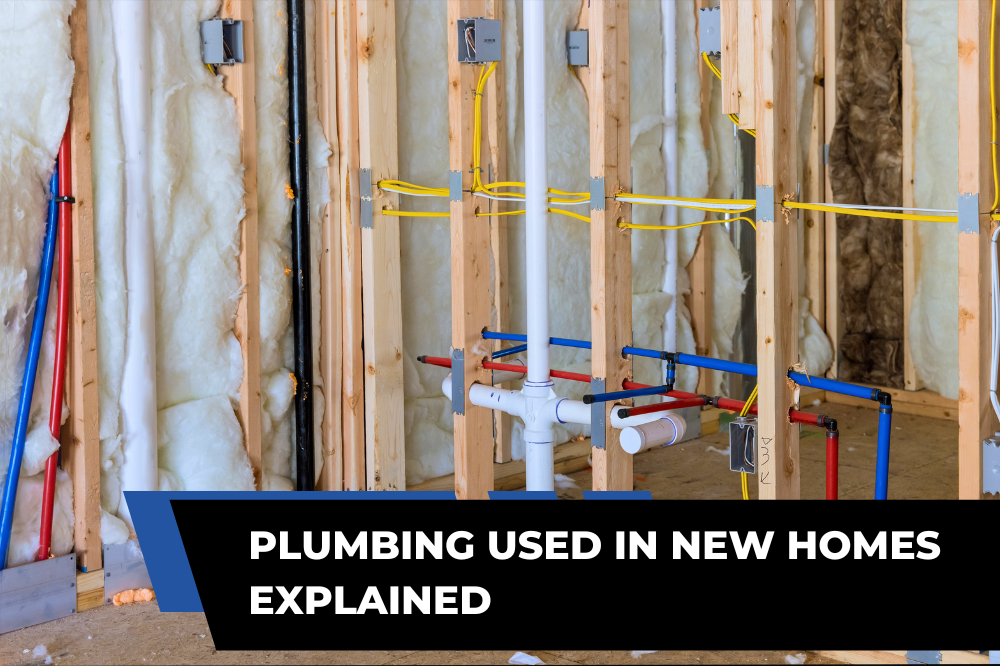
You may see red and blue PEX tubing in a utility room or unfinished basement. Plumbers and manufacturers commonly use these colours to help identify hot and cold lines, although colour alone does not prove a pipe’s type or function.
However, PEX has limitations. Installers must protect it from damaging ultraviolet light, use compatible fittings during installation, and safeguard it against freezing conditions.
A frozen pipe can still split or damage fittings, so homeowners and installers should never treat flexible tubing as a substitute for proper winterization.
Best known for: Flexible installation and use in many residential hot and cold water supply systems.
Copper Pipes: A Traditional Water Supply Option
Plumbers have used copper in residential plumbing for decades, and it remains an option in new construction.
It is strong, durable, and suitable for hot and cold water distribution when using the correct pipe type and installation method.
Copper also handles exposure to sunlight well, making it suitable for certain visible installations where plastic tubing may need extra protection.
In addition, many plumbers are familiar with copper repair and joining methods.
On the other hand, copper generally costs more than PEX in material and installation. Water chemistry, workmanship, and operating conditions can also affect its performance.
Corrosion may cause pinhole leaks in some systems, so copper should not be assumed to be trouble-free simply because it is metal.
Best known for: Long-standing use, rigidity, and durability when correctly selected and installed.
ABS Pipes: Common in Drainage Systems
Short for acrylonitrile butadiene styrene, ABS is a rigid black plastic commonly used for drain, waste, and vent piping in residential buildings.
ABS pipes carry wastewater away from plumbing fixtures and form part of the system that vents drainage lines.
The material is relatively lightweight, and plumbers can cut and join it using approved methods.
Correct sizing, slope, support, and joints are important because drainage relies on gravity and proper system design.
ABS is not a replacement for PEX or copper water supply tubing. A pipe’s appearance does not establish whether it is approved for a particular use, so homeowners should check the markings or ask a plumber when they are unsure.
Best known for: Residential drainage and vent applications where the product and installation meet applicable requirements.
PVC Pipes: Used for Approved Drainage and Other Applications
PVC means polyvinyl chloride. It is a lightweight plastic valued for its resistance to corrosion and its use in a range of drainage and sewer applications.
You sometimes encounter PVC in underground piping or other locations where local codes or standards approve the specific pipe product for the job.
However, not all PVC pipes are the same. Pressure-rated PVC products differ from drainage products, and approval for one application does not automatically make a pipe suitable for another.
In Ontario, the Building Code restricts the use of certain PVC pressure pipes in hot-water systems.
Therefore, homeowners should not assume that they can use ordinary PVC drain pipe for household water supply.
Best known for: Approved drainage, sewer, and selected piping applications, depending on the product specification and local requirements.
What About CPVC and Other Materials?
CPVC, or chlorinated polyvinyl chloride, is designed for hot- and cold-water distribution when the pipe and fittings meet the applicable requirements.
Other systems, including polypropylene and composite piping, may also be used in suitable installations.
These materials are less important to compare in a basic homeowner guide than the main supply and drainage options.
Still, their existence is a useful reminder that the right choice depends on the system design, certified product, and permitted application – not simply whether a pipe is plastic or metal.
How Do the Main Pipe Types Compare?
Use the intended application as your starting point when comparing materials. PEX and copper are primarily options to consider for water supply, while ABS and PVC are often encountered in drainage and sewer systems.
| Material | Common residential use | Potential advantage | Important consideration |
| PEX | Hot and cold water supply | Flexible and corrosion-resistant | Needs appropriate fittings and protection from UV exposure and freezing |
| Copper | Hot and cold water supply | Durable and well established | Often costs more; water chemistry can contribute to corrosion |
| ABS | Drain, waste, and vent piping | Lightweight and practical for drainage | Correct slope, support, and joints are essential |
| PVC | Approved drainage, sewer, or selected applications | Lightweight and corrosion-resistant | The exact product must be suitable for the intended use |
| CPVC | Hot and cold water supply | Designed for suitable water-distribution applications | Must meet applicable temperature, pressure, and installation requirements |
There is no single material that is automatically best for every pipe in a house. Instead, plumbers consider the pipe’s purpose, the home’s layout, the expected operating conditions, product requirements, and applicable code rules.
That is why a modern home can have both plastic and metal piping without anything being unusual about the design.
How Plumbers Choose Pipe Materials
Pipe selection involves more than comparing the price of a length of tubing. A plumber considers several factors before installing or replacing a system.
- Purpose: Water supply, drainage, venting, and underground piping all have different requirements.
- Building code: Pipe, fittings, and joining methods must be permitted for the intended application.
- Layout: The distance between fixtures, available space, and number of turns can affect the best installation method.
- Temperature and pressure: Supply materials must be suitable for the conditions the system will experience.
- Water quality: Water chemistry can affect some materials over time.
- Installation and repair: Labour, access, fitting compatibility, and future maintenance also matter.
For example, flexible PEX may be practical for routing water lines through a framed wall. Copper may be selected for a different design or because of project specifications.
Meanwhile, a drainage line needs the correct diameter and slope to carry wastewater effectively.
The best decision is the one that meets code, suits the job, and is installed correctly.
What Should Ontario Homeowners Know About Plumbing Codes?
If you live in Toronto or elsewhere in the GTA, plumbing work must comply with the applicable Ontario Building Code requirements.
The Code identifies requirements for approved piping materials, fittings, and installation practices. It does not mean every new house must use one universal pipe material.
Ontario’s current online reference is the 2024 Building Code Compendium, which includes Part 7 on plumbing and has been updated through subsequent amendments.
Specific requirements can depend on the type of piping, its location, and the system it serves.
For that reason, homeowners should avoid assuming that a pipe is permitted just because it is sold at a hardware store or used in another part of a house.
If you are buying a newly built home, ask the builder for plumbing specifications and available documentation.
If you are planning a renovation or repair, consult a qualified plumbing professional who can confirm which products and methods are permitted for your project.
Are Plastic Plumbing Pipes Safe for Drinking Water?
Plastic pipes can be suitable for drinking-water systems when the products and components meet the applicable requirements for potable water.
The important question is not simply whether the pipe is plastic. Its intended use, certification, fittings, and installation all matter.
Health Canada explains that PEX, PVC, and CPVC pipes and components used for drinking water must comply with the leaching requirements of NSF/ANSI/CAN Standard 61.
You can read its guidance on residential plumbing and water quality for more context.
Homeowners should not replace or modify water supply piping based only on appearance or online advice.
Instead, confirm the product’s markings and intended use, and ask a licensed plumber if you have concerns about an existing installation.
How Can You Identify the Pipes in Your Home?
You may be able to identify some plumbing materials by looking at exposed pipes in a basement, utility room, or beneath a sink.
Copper has a metallic appearance, PEX is flexible tubing, and ABS drainage pipe is often black. PVC is commonly white, although colour and appearance vary by product.
Still, visual clues are not enough to confirm every pipe’s material or approved use. Pipes may be hidden behind finished walls, and similar-looking products can have different ratings.
To identify your home’s plumbing more reliably:
- Check for printed manufacturer names, product markings, and standards on accessible pipes.
- Review the builder’s plumbing specifications or renovation records.
- Ask a plumber to identify uncertain or concealed piping.
- Avoid cutting into walls or disturbing pipes just to determine their material.
Knowing what is installed can help with future repairs. It can also help a plumber select compatible fittings and materials if a section needs replacement.
How Long Should Plumbing in a New Home Last?
The service life of a plumbing system depends on the material, water quality, installation quality, operating conditions, and maintenance.
As a result, there is no single lifespan that applies to every home or pipe.
The joints and fittings matter just as much as the pipe itself. Poor connections, freezing, physical damage, excessive pressure, or unfavourable water chemistry can lead to problems earlier than expected.
On the other hand, a correctly selected and installed system can provide many years of service.
Even in a new home, pay attention to warning signs such as recurring leaks, water stains, unexplained dampness, unusual changes in water pressure, slow drains, or persistent drainage odours.
Addressing a problem early can help limit damage to walls, floors, cabinetry, and other parts of the property.
What Should You Ask Before Buying a Newly Built Home?
Before closing on a new property, take time to understand the plumbing system. Ask the builder or appropriate representative:
- Which materials were used for the water supply and drainage systems?
- Are plumbing plans, product information, or inspection records available?
- Where are the main water shut-off valve and accessible cleanouts?
- Have required inspections been completed, and are any deficiencies outstanding?
- Who should you contact if a leak or plumbing concern appears after closing?
These questions can help you prepare for routine maintenance and make future repairs easier.
A new home still benefits from careful inspection and clear documentation, especially when most pipes are concealed behind finished surfaces.
Frequently Asked Questions
Are PEX Pipes Better Than Copper?
Neither material is best in every situation. PEX can simplify some installations because it is flexible and resistant to internal corrosion, while copper remains a durable and well-established supply-pipe option. Cost, layout, operating conditions, and workmanship all influence the decision.
Do New Homes Still Use Copper Pipes?
Yes. Builders and plumbers may still use copper in suitable installations. However, many modern houses use PEX for some or most water supply lines because of its flexibility and installation advantages.
What Type of Pipes Are Used for Home Drains?
ABS and PVC are common materials in residential drainage and sewer applications, depending on the product, location, and applicable requirements.
The pipe must be designed for the job and installed with the correct slope, support, and fittings.
Can I Find Out What Plumbing My House Has?
Yes. Check visible markings, ask the builder for material specifications, review renovation records, or contact a plumber. A professional can also help identify pipes that are concealed or difficult to distinguish.
Does a New Home Need Plumbing Maintenance?
Yes. Even new systems benefit from sensible care. Know where the main shut-off valve is, watch for leaks or drainage changes, and arrange professional help when you notice persistent problems. Prompt attention may prevent a small issue from becoming expensive water damage.
Plumbing Services in Toronto and the GTA
When it comes to residential and commercial plumbing in Toronto and the GTA, True Service Plumbing provides professional support for a wide range of plumbing needs.
From leaking pipes and drainage issues to questions about your home’s plumbing system, our team is ready to help.
Not sure which pipes your property uses or need help resolving a plumbing concern? Contact our team for information and assistance tailored to your situation.
Keep your plumbing working as it should. Contact True Service Plumbing today to discuss your plumbing needs and arrange professional service.