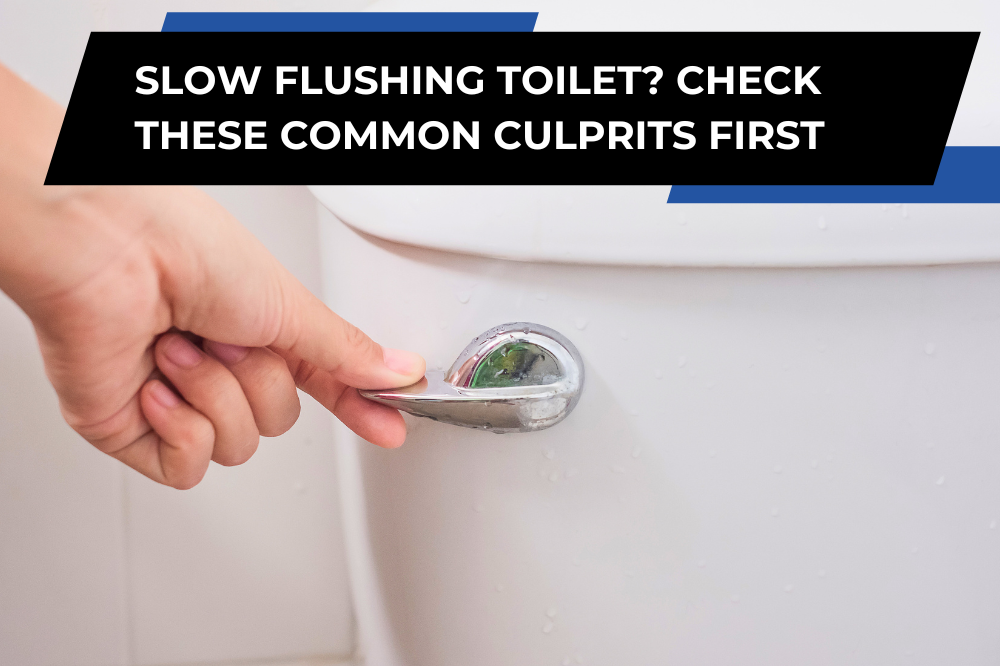
Why is my toilet flushing slowly? If your toilet swirls weakly, takes too long to empty, or leaves waste behind, something may be interfering with its flushing process.
The cause could be a partial blockage, low tank water, worn flushing parts, or a problem farther down the drain.
Fortunately, a few simple checks can help you narrow down the issue.
However, it is important to recognize when the symptoms point to a larger plumbing problem.
This guide explains the common causes, what you can safely check at home, and when to call a professional.
What Does a Slow Toilet Flush Look Like?
First, pay attention to what happens when you press the handle. A weak flush and slow drainage can look similar, but they do not always have the same cause.
Weak or Incomplete Flush
A weak flush may create a small swirl without carrying waste and toilet paper away.
The bowl might not clear completely, so you may feel tempted to flush a second time.
In this case, the toilet may not be releasing enough water or directing it into the bowl with enough force.
Water That Rises Before Draining
If the water level rises unusually high and then slowly drops, a partial blockage may be restricting the outlet.
In contrast, if the bowl empties but the flush still seems weak, the problem may involve the tank, flapper, or bowl jets.
Therefore, noticing the exact symptom can help you choose the right next step.
6 Common Causes of a Toilet That Flushes Slowly
Several issues can affect flushing performance. Start with the common causes below, but remember that symptoms alone cannot always confirm the source.
1. A Partial Clog in the Toilet Trap
The toilet trap is the curved passage that carries waste from the bowl into the drain.
However, too much toilet paper, wipes, hygiene products, or another unsuitable item can become lodged in this passage.
Water may still pass through a partial clog, which is why the toilet can flush without clearing properly.
Signs of a possible blockage include water rising higher than usual, a slow drop in the bowl level, or repeated incomplete flushes.
Never keep flushing to force the obstruction through. Instead, stop if the bowl is filling toward the rim and use a toilet plunger if it is safe to do so.
2. The Tank Water Level Is Too Low
A toilet needs the correct amount of water in its tank to produce a proper flush. If the tank is not filling high enough, the bowl may receive too little water to clear its contents effectively.
This can happen when the float is set incorrectly or the fill valve is worn, dirty, or failing.
To check, remove the tank lid carefully after the tank has refilled. Compare the water level with the manufacturer’s mark or instructions; the correct level varies by toilet model.
If you are not sure how to adjust the float or valve, avoid forcing the parts. A small adjustment may help, but a faulty component may need repair or replacement.
3. A Flapper or Flush Valve Is Not Working Properly
The flapper opens to release tank water into the bowl and should stay open long enough for the intended flush.
If it closes too early, or if the chain is too tight, the toilet may release too little water.
A damaged flapper can also allow water to leak slowly from the tank, causing the toilet to refill frequently.
Meanwhile, a chain that is too loose may prevent the flapper from lifting fully. Check whether the handle moves freely and whether the flapper lifts and closes normally.
If the parts look worn or do not move correctly, replacement parts may restore performance.
4. Mineral Buildup Restricts the Bowl Jets
Small openings under the toilet rim direct water around the bowl, while the siphon jet helps move water through the trapway on many toilet designs.
Over time, mineral deposits and debris can restrict these openings. As a result, the flush may lose its swirling force even when the tank appears to contain enough water.
Use a cleaning method approved for your toilet and follow the product instructions.
Avoid scraping the porcelain aggressively or pushing sharp objects into the openings, because you could damage the surface.
If buildup is difficult to remove, a plumber can inspect the bowl and recommend a suitable solution.
5. A Drain or Plumbing Vent Problem
Sometimes the toilet itself is working properly, but wastewater cannot move through the drainage system as it should.
A partial obstruction farther along the drain may slow the flow. Additionally, a blocked plumbing vent can interfere with the movement of air through the drainage system and contribute to gurgling or abnormal drainage.
Pay attention to other fixtures. If sinks, tubs, or other toilets also drain slowly, or you hear gurgling from several drains, the problem may extend beyond one toilet.
Because vent and drain problems can be difficult to locate safely, professional diagnosis is usually the better choice.
6. An Older, Damaged, or Poorly Installed Toilet
Toilets differ in design and flushing performance. An older model may not clear the bowl as effectively as a newer, properly functioning toilet.
However, age alone does not mean a toilet needs replacing.
If the issue began immediately after a new toilet was installed, the model, installation, or connection may need checking.
First, rule out a partial clog and problems with the tank components. Then ask a plumber to assess the installation if the flush remains weak.
How to Troubleshoot the Problem Safely
Before trying a repair, take a moment to observe the toilet. In particular, note whether the bowl water rises, whether the tank fills normally, and whether other fixtures are affected.
Step 1: Check Other Drains
Run a nearby sink or shower and watch how it drains. If everything else works normally, the issue may be isolated to the toilet.
However, if several fixtures drain slowly, gurgle, or back up, stop using affected fixtures and seek professional help.
Step 2: Inspect the Tank
Once the tank has refilled, check the water level and look at the flapper and chain. Make sure the chain is not preventing the flapper from opening or closing.
Do not make adjustments while unsure of how the mechanism works, and stop if you notice a leak around the tank or supply connection.
Step 3: Try a Toilet Plunger
If a partial clog seems likely and the bowl is not close to overflowing, use a flange-style toilet plunger that fits the outlet.
Create a seal and plunge with controlled, steady movements. Afterwards, check whether the water drains normally. If the blockage does not clear, avoid repeated forceful attempts.
Step 4: Avoid Risky Chemical Fixes
Do not rely on harsh chemical drain cleaners to clear a toilet blockage.
These products can create splash and exposure hazards, and some may damage plumbing components. Also, never mix cleaning products.
If you have already added a chemical cleaner, tell the plumber what you used before they begin work.
When Should You Call a Plumber?
A simple toilet issue may respond to basic troubleshooting.
Nevertheless, call a licensed plumber if the problem keeps returning, your checks do not resolve it, or you notice any of the following warning signs:
- The bowl repeatedly rises close to the rim.
- Multiple toilets or drains are slow or gurgling.
- Water backs up into a bathtub, shower, or another fixture.
- Wastewater returns to the bowl, or sewage odours appear with drainage problems.
- The toilet leaks, rocks at its base, or shows signs of damage.
Most importantly, do not keep flushing a toilet that is close to overflowing. If sewage backs up into the home, stop using affected fixtures and arrange prompt professional assistance.
A plumber can determine whether the cause is a local blockage, a faulty toilet component, a venting issue, or a larger drain or sewer problem.
How to Prevent Slow Flushing
A few simple habits can help reduce the chance of future blockages and flushing problems:
- Flush only human waste and toilet paper. Even products labelled “flushable” can contribute to blockages.
- Keep wipes, paper towels, hygiene products, dental floss, and other waste out of the toilet.
- Pay attention to changes in water level, flushing strength, or refill behaviour.
- Clean the bowl and accessible openings with products suitable for your toilet.
- Address recurring clogs instead of treating each one as an isolated event.
- Arrange an inspection if several fixtures develop drainage problems.
Above all, take a change in flushing performance seriously when it keeps happening.
Early attention may help you avoid repeated clogs, messy backups, and more extensive repairs.
Frequently Asked Questions
Why Is My Toilet Flushing Weakly Even When the Tank Is Full?
A full tank does not guarantee a strong flush. The flapper may close too soon, the flush valve may not release enough water, or mineral deposits may be restricting the rim holes or siphon jet. A partial clog can also reduce performance.
Therefore, check the tank mechanism and bowl flow before assuming the toilet needs replacing.
Why Does the Water Rise Before It Drains?
This often points to a partial obstruction in the toilet trap or drain. However, if other fixtures also drain slowly or gurgle, the issue may involve a larger section of the drainage system. Stop flushing if the water approaches the rim.
Why Does My Toilet Need Two Flushes?
A toilet that regularly needs two flushes may have a weak flush, restricted bowl jets, a partial blockage, or a design or installation issue.
While one extra flush may occasionally happen, a consistent pattern deserves investigation.
Can a Plumbing Vent Cause Flushing Problems?
Yes. A blocked or damaged vent can contribute to abnormal drainage and gurgling.
Because similar symptoms can also come from a drain obstruction, a plumber can inspect the system to identify the actual cause.
Get Help With a Slow-Flushing Toilet in Toronto and the GTA
When toilet flushing problems disrupt your home or business, True Service Plumbing is ready to help.
Our licensed plumbing professionals serve residential and commercial customers across Toronto and the surrounding GTA, diagnosing toilet issues and recommending practical repairs.
Whether you are dealing with a recurring blockage, a weak flush, or signs of a larger drainage problem, contact True Service Plumbing for information and assistance.
Let our team help restore reliable plumbing and give you greater peace of mind.