
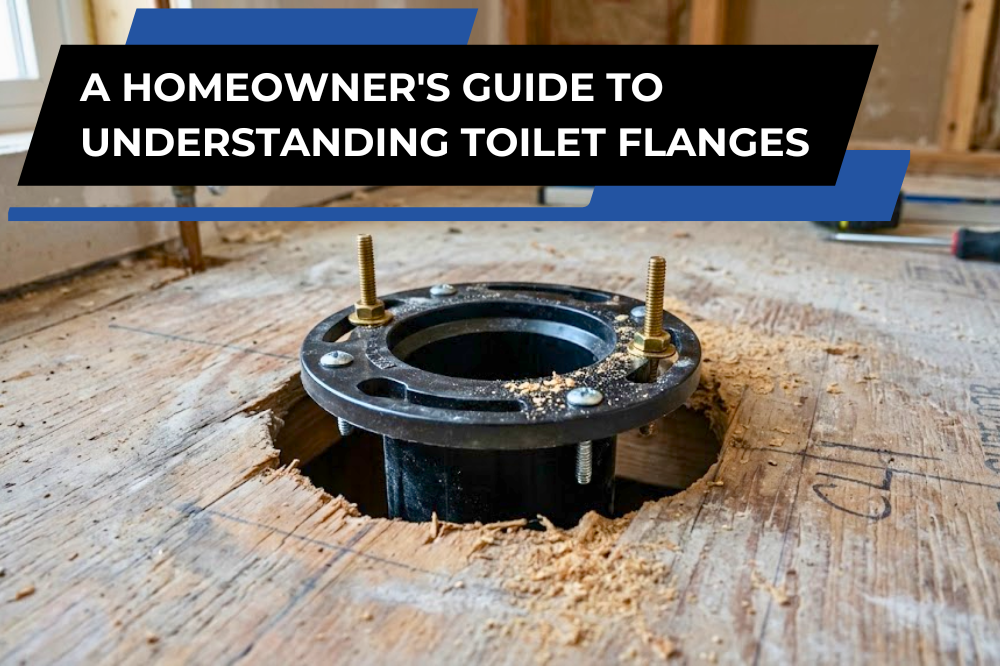
What is a toilet flange? It is a small but important plumbing fitting hidden beneath your toilet.
Although you rarely see it, it helps connect the fixture to the drainpipe, keeps the toilet securely attached to the floor, and works with a seal to prevent wastewater from escaping around the base.
Because this component sits out of sight, homeowners may not think about it until a toilet starts rocking, a leak appears, or an unpleasant sewer smell develops.
However, those symptoms can have several causes, so it is important not to assume the fitting itself has failed.
Understanding how it works can help you spot trouble early, avoid preventable water damage, and know when to call a plumber.
What Does the Flange Do?
Plumbers install the fitting around the bathroom’s toilet drain opening.
It creates a connection between the toilet outlet and the plumbing that carries wastewater away from your home.
It also provides slots or holes for the bolts that hold the toilet in position.
A properly installed flange performs three jobs:
- Connects the drain: It provides the transition between the toilet and the drainage pipe.
- Secures the fixture: Mounting bolts attach the toilet to the fitting, helping prevent movement during everyday use.
- Supports a reliable seal: A wax ring or compatible wax-free seal sits between the toilet and the connection to help keep water and sewer gases from escaping into the bathroom.
These parts work together, but they are not interchangeable. The bolts hold the toilet in place, while the seal closes the gap between the toilet outlet and drain connection.
Therefore, a leak does not automatically mean the flange has broken; a worn seal or loose hardware may be responsible instead.
Where Is It Located?
You will find the fitting directly beneath the toilet, surrounding the drain opening in the floor.
In most homes, plumbers must lift the toilet off its mounting bolts before they can fully inspect the fitting.
As a result, a homeowner usually cannot confirm its condition just by looking at the outside of the toilet.
What Does It Look Like?
Once the toilet is removed, the fitting typically looks like a circular ring around the drainpipe.
It has openings for the mounting bolts and may be made from PVC plastic, ABS plastic, cast iron, or metal components, depending on the plumbing system and installation.
How High Should It Sit?
Height matters. In a typical installation, the flange should sit on top of or level with the finished floor, following the product manufacturer’s instructions.
If it sits too low after new flooring is installed, the seal may not compress correctly.
If it sits too high or is not level, it can interfere with the toilet’s seating.
In either case, the installation may need correction rather than a thicker seal alone.
Signs There May Be a Problem
A damaged or poorly installed fitting can affect how the toilet sits and seals. Watch for the following warning signs, while remembering that each can have other causes.
The Toilet Rocks or Wobbles
A toilet should sit firmly on the floor. If it moves when someone sits down or shifts their weight, the mounting bolts may be loose, the floor may be uneven, or the flange may be damaged or improperly secured.
Avoid repeatedly tightening the bolts with excessive force because porcelain can crack. If the toilet continues to move after a careful check, arrange an inspection.
Water Appears Around the Base
Water pooling around the toilet may indicate a failed wax ring, a loose toilet, a damaged fitting, or a leak elsewhere.
For example, water from the tank or supply line can run down and collect at the base.
However, if water appears after flushing, take the problem seriously because wastewater may be escaping beneath the fixture.
Dry the area and avoid using the toilet if the leak is active or substantial. Then arrange a prompt assessment.
Even a small recurring leak can damage flooring or the subfloor before the damage becomes obvious.
Sewer Odours Persist
A persistent sewer-like smell can point to a failed seal or another drainage issue. Nevertheless, odours can also come from a dry drain trap or other plumbing problems. Do not treat smell alone as proof that the flange has failed. If the odour continues after ordinary cleaning, have the cause investigated.
Flooring Feels Soft or a Ceiling Below Shows Stains
Soft flooring, discoloured material, or a water stain on the ceiling below the bathroom can signal a hidden leak.
These signs deserve prompt attention because moisture may be affecting the subfloor or nearby building materials.
Stop using the toilet if you suspect an active leak and contact a plumbing professional.
What Causes Damage?
Several conditions can lead to failure or poor performance:
- Cracks or corrosion: Plastic parts can crack, while metal components may rust or deteriorate over time.
- Loose or missing fasteners: If the fitting is not secured firmly to the subfloor, the toilet can shift and put stress on the seal.
- Incorrect height or alignment: A fitting positioned too low, too high, or unevenly may not allow the toilet to seal correctly.
- Floor renovations: New tile or flooring can change the finished floor height and leave the existing connection recessed.
- Movement or poor installation: Repeated toilet movement, unsuitable materials, or incorrect installation can contribute to damage.
The age of the bathroom alone does not determine whether replacement is needed.
Instead, a plumber should assess the fitting, its connection to the drainpipe, the mounting points, and the condition of the surrounding floor.
Can It Be Repaired, or Does It Need Replacing?
The right fix depends on what has failed. In some cases, a repair ring can restore the mounting surface when the underlying fitting and pipe connection remain serviceable.
If the fitting sits too low, a compatible extender may correct the height, provided the existing installation is sound and the product is appropriate for that setup.
Replacement may be necessary when the ring is badly cracked, the metal has deteriorated, the pipe connection has failed, or the fitting cannot be secured safely.
A repair that only covers visible damage will not solve a problem with a loose drain connection or a damaged subfloor.
Does the Wax Ring Need Replacing Too?
Usually, yes. When a toilet is lifted, the wax ring has already been compressed into place and should not be reused.
A new wax ring or compatible wax-free seal is normally installed when the toilet is reattached.
The plumber should also check the mounting bolts, floor condition, and toilet stability before completing the job.
Can the Work Be Done Without Removing the Toilet?
A full inspection or repair generally requires removing the toilet because the fitting is underneath it.
You may be able to spot warning signs without lifting the fixture, but you cannot reliably assess cracks, corrosion, bolt slots, or the drain connection from the outside alone.
How Much Does Repair or Replacement Cost?
The total price depends on the scope of the work rather than one standard fee.
A straightforward repair may cost less than removing a damaged fitting and reconnecting the drainpipe.
The quote can also change if the plumber discovers water-damaged flooring, a deteriorated subfloor, difficult access, or older pipe materials that need extra care.
Before approving the work, ask what the estimate includes.
For example, confirm whether it covers removing and reinstalling the toilet, a new seal and mounting hardware, the repair or replacement parts, disposal, and any additional floor or pipe repairs.
A professional assessment is the best way to determine the actual cause and provide a dependable quote for your home.
Should You Try a DIY Repair or Call a Plumber?
Some experienced homeowners may be comfortable with a straightforward repair when the fitting, drainpipe, and subfloor are in good condition.
However, lifting and resetting a toilet requires care, correct parts, and a properly compressed seal.
A mistake can leave the toilet unstable or allow leaks to continue beneath the floor.
Call a plumber if the fitting is cracked or corroded, the toilet keeps rocking, water damage is visible, the drainpipe connection appears loose, or a previous repair has not solved the problem.
Professional help is also sensible when you cannot identify the source of a leak or when the bathroom floor may be damaged.
Addressing the cause early can prevent a relatively small repair from becoming a larger restoration project.
How to Help Prevent Future Problems
Although no fitting lasts forever, a few simple habits can reduce the chance of problems going unnoticed:
- Deal with a rocking toilet promptly instead of allowing repeated movement to stress the seal.
- Investigate water around the base rather than repeatedly wiping it away.
- Have persistent sewer odours or unexplained moisture checked.
- During a bathroom renovation, ensure the flange height is assessed after the finished floor level is established.
- When a toilet is removed for service, use a new seal and secure the fixture correctly when reinstalling it.
Routine replacement is not usually necessary simply because the fitting has reached a certain age.
Its material, condition, installation, and surrounding floor are more useful indicators of whether work is needed.
Frequently Asked Questions
Is the Flange the Same as a Wax Ring?
No. The flange connects the toilet to the drainpipe and provides the mounting points. The wax ring or compatible seal sits between the toilet and the fitting to help prevent leaks and sewer gases from escaping.
Can a Broken Flange Cause Water Damage?
Yes. If damage or movement prevents the toilet from sealing properly, water can escape beneath the fixture and affect the floor or subfloor. However, a failed wax ring or a leak from another toilet component can cause similar symptoms.
Can the Fitting Be Replaced Without Replacing the Drainpipe?
Sometimes. The answer depends on how the fitting connects to the existing pipe and whether that pipe is still in good condition. A plumber can identify a suitable repair method after inspecting the installation.
Is It Safe to Keep Using a Toilet That Leaks at the Base?
It is best to stop using it when the leak is active, particularly if water appears after flushing or the toilet is unstable. Arrange an inspection promptly to reduce the risk of further water damage.
Toilet Flange Repair in Toronto and the GTA
A toilet that rocks, leaks, or produces persistent sewer odours should not be ignored.
True Service Plumbing provides residential and commercial plumbing services throughout Toronto and the surrounding GTA.
Our team can assess suspected flange damage, identify the cause of toilet leaks, and explain the appropriate repair options for your property.
Need help with a toilet installation or a plumbing issue around the base of your toilet?
Contact True Service Plumbing for more information or to arrange service. We’re here to help restore a secure installation and reliable plumbing performance.