A plumbing maintenance checklist helps Toronto and GTA homeowners prepare for colder weather, spot developing problems, and decide which repairs need attention before winter.
You probably already have leaves to rake and outdoor furniture to put away.
However, your pipes, drains, and basement protection equipment deserve a place on that seasonal to-do list.
An attached garden hose can interfere with drainage. Meanwhile, a slow drain or unreliable sump pump can become a bigger headache when you least expect it.
The good news? You can start with simple checks, then bring in a plumber for anything that needs closer investigation.
Use this guide to work from outside your home to the basement, one manageable task at a time.
When Should You Start Preparing for Winter?
Start while outdoor temperatures still allow you to inspect equipment and arrange repairs comfortably.
Most importantly, finish winterizing seasonal water lines before freezing weather arrives.
Rather than relying on a specific date, watch the local forecast. Conditions vary across Toronto, Vaughan, Richmond Hill, Scarborough, and other GTA communities.
If you are reading this in late fall 2026, begin with outdoor faucets and any known freeze risks. Then move on to leaks, drainage, and basement equipment.
Also, book professional help early if a valve will not close, a pipe repeatedly freezes, or a pump fails its test.
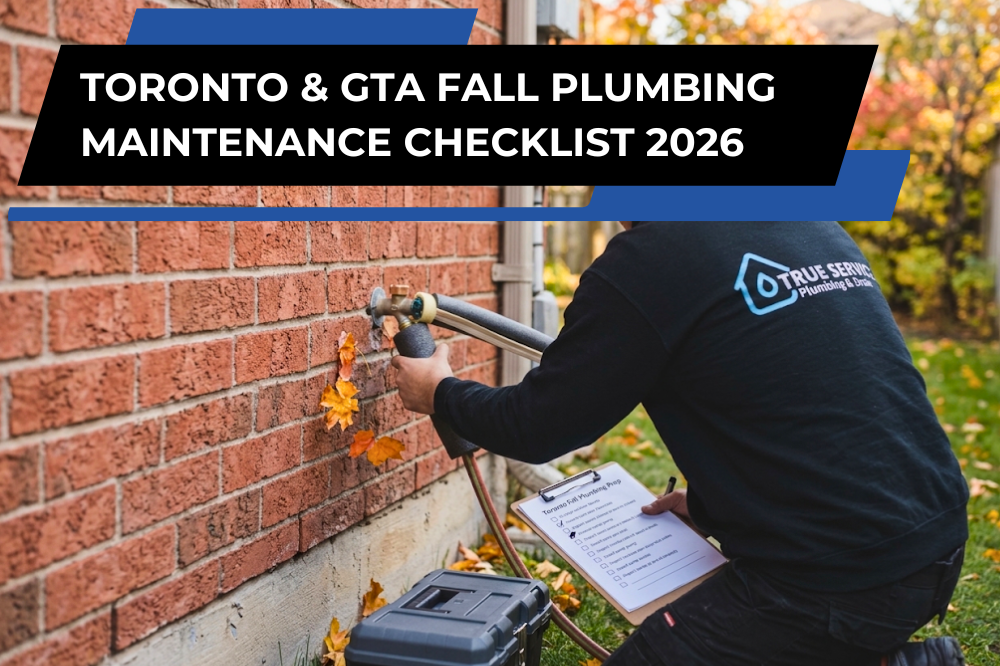
1. Disconnect Hoses and Prepare Outdoor Faucets
Outdoor water connections are an easy place to start. However, different faucet designs require different winter preparation.
Remove Hoses and Accessories
Disconnect garden hoses, splitters, timers, and spray attachments. Next, drain them and store them somewhere protected.
Even a frost-free faucet needs its hose removed so it can drain as designed. Otherwise, trapped water can leave parts of the assembly vulnerable to freezing.
Before moving indoors, look for dripping around the spout or where the faucet meets the wall.
Check the Outdoor Water Shutoff
If your outdoor line has a dedicated indoor shutoff, close it and open the outdoor faucet to release remaining water.
Follow the faucet manufacturer’s instructions for any additional draining steps.
Toronto’s frozen-pipe guidance recommends disconnecting hoses, isolating outdoor water supplies where separate valves exist, and draining outdoor taps.
However, do not force a seized valve. If water continues flowing after you close it, arrange a repair.
Similarly, have irrigation systems, outdoor kitchens, and other seasonal water lines winterized according to their equipment requirements.
Sprinkler blowouts may require a qualified irrigation professional.
2. Look for Leaks Inside Your Home
Next, take a slow walk through kitchens, bathrooms, laundry areas, and the basement.
Small leaks do not always create obvious puddles. Instead, they may leave a stain, a damp cabinet, or a persistent musty smell.
Check these accessible areas:
- Supply connections beneath sinks.
- Toilet bases and water supply lines.
- Washing machine hoses.
- Exposed basement pipes.
- Accessible dishwasher connections.
- The floor around your water heater.
Use a flashlight and dry tissue to help identify moisture around accessible joints. However, remember that condensation can also make a pipe wet.
Use Your Water Meter for Another Clue
If you can safely read your meter, turn off fixtures and pause water-using appliances. Then check whether the meter indicates continued use.
Account for equipment that may operate automatically, such as a water softener or ice maker.
Unexplained movement can suggest a leak, but it will not identify the location. Therefore, contact a plumber if you cannot explain the water use.
3. Deal With Slow Drains Before They Worsen
A sink that drains slowly may seem manageable. Nevertheless, repeated backups deserve attention.
Start by removing accessible hair and debris from strainers and stoppers. Also, keep cooking grease, wipes, and food scraps out of drains.
Watch for signs that the problem extends beyond one fixture:
- Several drains slow down together.
- Toilets gurgle when another fixture drains.
- Wastewater appears in a basement drain.
- The same blockage returns after clearing.
- Sewer odours persist.
In these situations, a plumber can assess whether drain cleaning, a camera inspection, or another repair makes sense.
Avoid repeatedly treating an unexplained blockage with chemical cleaners. Instead, identify the cause so you can choose an appropriate solution.
If sewage starts backing up, stop using affected plumbing and seek help promptly.
4. Test Your Sump Pump and Check Its Discharge
If your home has a sump pump, include it in your plumbing maintenance checklist.
A sump pump removes water collected in its pit, often from the foundation drainage system.
Consequently, its ability to start and discharge water matters during wet weather.
Follow the manufacturer’s testing instructions.
Where the design allows, slowly adding water to the pit can help you observe whether the float activates the pump and the water level falls.
Keep your hands away from moving components and electrical connections. Also, avoid opening sealed covers unless the instructions permit it.
Look for:
- Debris that could obstruct the float.
- Unusual grinding or rattling.
- A pump that runs without lowering the water.
- Visible discharge-pipe damage.
- Water returning toward the foundation.
Outside, check that the discharge route remains clear and follows municipal requirements.
As temperatures fall, ask a plumber about any arrangement that could trap water and freeze.
If you have a battery backup, test it according to its instructions as well.
However, remember that backup runtime depends on battery condition and how frequently the pump operates.
5. Inspect Your Backwater Valve
A backwater valve serves a different purpose from a sump pump.
It helps prevent sewage from flowing backward through the sewer connection into your home.
However, debris or a sticking component can affect its operation. Keep the access point clear and follow the manufacturer’s inspection and cleaning schedule.
If you cannot safely inspect it, book professional maintenance. Additionally, ask how to recognize when the valve has closed.
When it closes, avoid using the plumbing fixtures it protects because wastewater cannot drain normally through that route.
Neither device guarantees a dry basement. Therefore, assess the overall drainage system rather than relying on a single piece of equipment.
Check Toronto’s Updated 2026 Subsidy Program
Toronto expanded its Basement Flooding Protection Subsidy Program in May 2026.
Eligible work may include a home plumbing assessment, backwater valves, a sump pump, and battery backup equipment.
Before arranging work, review the City’s current eligibility, contractor, permit, and documentation requirements.
Funding is conditional, and submitting an application does not guarantee payment.
Elsewhere in the GTA, check your own municipality’s programs and rules.
6. Keep Water Moving Away From the Foundation
Next, step outside and look at how rainwater travels around your home.
Clear accessible leaves from window wells and drainage openings. Also, arrange safe gutter cleaning when necessary.
Check whether downspouts discharge toward the foundation or whether water pools beside basement walls. Likewise, look for blocked drainage paths between properties.
The goal is to direct water away without creating problems for neighbours or public walkways.
If you notice recurring pooling, foundation seepage, or damaged drainage connections, seek an assessment.
A plumbing repair may help, but some properties also need grading or other exterior work.
7. Protect Pipes in Cold Areas
Look for water pipes in garages, crawl spaces, unfinished basements, and areas near exterior walls.
Then check for drafts around nearby openings. Seal appropriate gaps without blocking required ventilation or combustion-air supplies.
Insulate accessible vulnerable pipes with suitable materials. However, insulation only slows heat loss; it does not generate warmth or guarantee protection.
Maintain heat in areas containing water pipes, including when you travel. If a particular pipe freezes repeatedly, ask a plumber to investigate its location and exposure.
Never use an open flame to thaw a frozen pipe.
8. Give Your Water Heater a Visual Check
Your water heater also deserves attention before winter routines get busy.
Look for moisture, corrosion, unusual noises, or changes in hot water performance.
Additionally, keep the surrounding area accessible and maintain the manufacturer’s required clearances.
Maintenance varies between tank and tankless systems. Therefore, follow the equipment instructions for servicing, flushing, or descaling.
Do not assume every heater needs the same DIY procedure. If you notice leakage or repeated interruptions, arrange professional service.
Also, never cap or block a temperature and pressure relief discharge pipe to stop a leak.
9. Locate Your Shutoff and Prepare for Winter Travel
Find your main water shutoff and make sure everyone in the household knows its location. Then clear away stored items that could delay access.
If the valve looks corroded, leaks, or resists movement, have a plumber assess it.
Before an extended trip, arrange property checks and review your home-insurance requirements.
Also, consider leak alarms near water-using appliances and basement equipment.
Ask for advice before shutting off the main supply, especially if your heating system or other equipment depends on water.
Your Quick Fall Review
Use this final plumbing maintenance checklist to track the essentials:
- Disconnect hoses and drain seasonal water lines.
- Check outdoor faucets and shutoffs.
- Inspect accessible fixtures and pipes for leaks.
- Address recurring drainage problems.
- Test the sump pump and backup equipment.
- Maintain the backwater valve.
- Check exterior drainage routes.
- Protect vulnerable pipes from cold.
- Inspect the water heater.
- Locate the main shutoff.
- Arrange professional help for unresolved problems.
If your budget is limited, prioritize active leaks, immediate freeze risks, sewage backups, and failed protective equipment.
Afterward, plan less urgent improvements around your home’s condition.
Fall Plumbing Services With True Service Plumbing
Preparing your home for winter starts with understanding what needs attention.
True Service Plumbing helps homeowners across Toronto and the surrounding GTA assess leaks, drainage concerns, sump pumps, backwater valves, and other seasonal plumbing issues.
Whether you need help with one stubborn problem or want guidance on your next steps, our team can discuss suitable options for your property.
We also serve commercial customers and provide emergency plumbing assistance.
Have a concern you spotted during your fall checks?
Contact True Service Plumbing for more information or to arrange service.
Quality care, quality service — leave the wet stuff to us.