How long do pipes last in a home, and how can you tell when yours need attention?
Most plumbing materials can serve a home for decades.
However, their actual condition depends on the material, installation quality, water conditions, and environment.
That means an older home does not automatically need entirely new plumbing.
Likewise, newer pipes can develop problems when poor installation or unsuitable operating conditions put them under stress.
For Toronto and GTA homeowners, the practical goal is simple: understand what you have, recognize changes, and address problems before they cause extensive damage.
This guide explains common pipe materials, what affects their service life, and how to decide between repairs and replacement.
What Is the Expected Lifespan of Plumbing Pipes?
Different materials age differently.
As a result, there is no single replacement deadline that applies to every home.
The following figures provide useful planning benchmarks:
| Pipe material | General lifespan benchmark | Common application |
| Copper | Approximately 50–70 years | Water supply piping |
| PEX | Around 50 years under rated operating conditions | Hot and cold water distribution |
| Cast iron | Approximately 50–60 years | Drain and waste piping |
| ABS and PVC | Approximately 50–80 years | Drain, waste, and vent piping |
| Galvanized steel | Assess individually, especially in older installations | Older water supply systems |
| CPVC | Check product guidance and operating conditions | Hot and cold water supply |
InterNACHI’s inspection guidance provides the copper, cast iron, ABS, and PVC benchmarks above.
Meanwhile, SharkBite describes a predicted 50-year service life for its PEX tubing when it operates within its pressure and temperature ratings.
These estimates guide planning; they do not guarantee performance.
More importantly, reaching an estimated age does not prove a pipe has failed. An inspection can help establish whether it remains serviceable.
Water Supply Pipes and Drains Have Different Jobs
Water supply pipes carry pressurized water to your faucets, toilets, and appliances.
Consequently, a failure can release water continuously until someone shuts off the supply.
Drainpipes carry wastewater away. Their problems often appear as slow drainage, recurring blockages, leaks, or backups.
Therefore, replacing one system does not automatically update the other.
A home can have newer copper supply pipes alongside much older cast iron drains.
Start by Identifying What Your Home Has
Before planning an upgrade, find out which materials serve your property.
Look at accessible plumbing near the water meter, beneath sinks, and along unfinished basement ceilings.
Copper usually has a reddish-brown metallic appearance, while exposed older sections may look darker.
Meanwhile, PEX is flexible plastic tubing that often appears red, blue, or white.
Rigid plastic drainpipes may carry printed markings that identify their material.
However, appearance alone cannot confirm every pipe type.
Paint, corrosion, and previous repairs can make identification difficult.
Look Beyond the Home’s Construction Date
Your house might be a century old, but some plumbing could have been replaced recently.
Conversely, a renovated bathroom may still connect to original pipes behind the walls.
To build a clearer picture, review:
- Previous home inspection reports.
- Plumbing invoices and renovation records.
- Available installation dates or product markings.
- Notes about recurring leaks or drain repairs.
Also, remember that one visible section does not represent the entire system.
A plumber may find several materials installed during different renovations.
Why Do Some Plumbing Systems Deteriorate Faster?
Age matters, but operating conditions often explain why similar pipes perform differently.
Water Conditions and Pressure
Water chemistry can affect corrosion and deposits inside certain materials.
Over time, internal buildup can restrict flow, while corrosion can weaken metal piping.
Similarly, excessive pressure can place additional stress on connections, valves, and fixtures.
If your plumbing develops repeated leaks or noticeable pressure changes, investigate the cause. Otherwise, replacing one damaged section may leave the underlying problem unresolved.
Installation Quality
A pipe needs suitable fittings, proper support, and room for expected movement.
For example, poorly supported piping can place stress on joints. Likewise, incompatible components or incorrect installation methods can create problems long before the material reaches its expected service life.
Therefore, choosing the right material is only part of the job. Correct installation matters just as much.
Freezing and External Conditions
Toronto and GTA winters can expose vulnerable plumbing to freezing temperatures, particularly in unheated spaces and poorly protected exterior walls.
Although some materials tolerate expansion better than others, no homeowner should treat plumbing as freeze-proof.
Buried pipes face different challenges. Soil movement, external loads, and damaged joints can affect underground lines.
In addition, roots can enter compromised sewer connections and contribute to recurring blockages.
Warning Signs That Deserve Attention
You do not need to wait for a major flood to investigate aging plumbing.
Instead, watch for patterns that suggest a developing problem.
Repeated Leaks or Visible Deterioration
One leaking connection may need a straightforward repair. However, leaks appearing in several locations deserve a broader assessment.
Look for:
- Damp joints or persistent dripping.
- Water stains beneath exposed pipes.
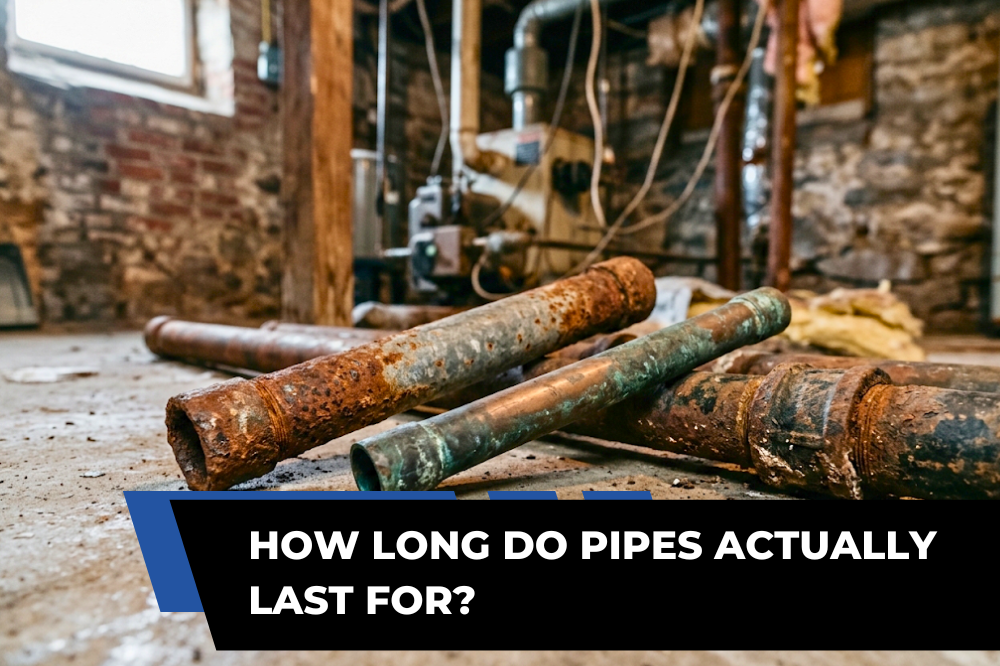
- Flaking or heavily corroded metal.
- Recurring repairs along the same piping system.
Green colouring on copper does not automatically mean replacement is necessary.
Nevertheless, wet deposits, recurring staining, or active leakage warrant investigation.
Reduced Flow or Discoloured Water
Weak flow can result from internal restrictions.
However, clogged aerators, partially closed valves, and fixture problems can produce similar symptoms.
First, note whether the issue affects one faucet or several fixtures.
Likewise, observe whether discolouration appears in hot water, cold water, or both.
These details can help a plumber narrow down the source.
Because several conditions can cause these changes, avoid assuming that every pressure or colour problem requires repiping.
Recurring Drain Backups
A single blocked sink may have a local obstruction.
By contrast, repeated backups or problems affecting several fixtures can suggest an issue farther along the drainage system.
Furthermore, repeated clearing may provide only temporary relief when a damaged section, displaced joint, or root intrusion remains.
An appropriate drain inspection can help identify what keeps causing the blockage.
Hidden Moisture
Watch for unexplained dampness, musty smells, peeling finishes, or new ceiling stains.
Also, investigate unexpected water consumption when household habits have not changed.
A running toilet or appliance issue may explain it, but a concealed leak is another possibility.
If a pipe actively leaks, shut off the relevant water supply when safe and arrange prompt assistance.
Should You Repair the Problem or Replace the Piping?
The right decision depends on the extent of the damage and the condition of the surrounding system.
When a Targeted Repair Makes Sense
A limited repair may suit an isolated damaged fitting or accessible section when nearby piping remains in good condition.
For example, a leaking joint does not automatically justify replacing every supply line in the house.
However, the repair should address the cause. If excessive pressure or poor support contributed to the failure, correcting those conditions can help prevent another problem.
When Broader Replacement Becomes Practical
Replacement deserves closer consideration when:
- Leaks develop in multiple locations.
- Corrosion or deterioration affects extensive sections.
- Internal restrictions significantly reduce usable flow.
- Drain inspections reveal substantial damage.
- Previous repairs keep failing or multiplying.
Additionally, planned renovations can create an opportunity to replace questionable piping while walls and ceilings are accessible.
Ask for a clear explanation of what needs replacement and why.
A useful recommendation connects observed conditions to a practical scope of work.
What Can a Professional Inspection Reveal?
A plumber can assess accessible materials, connections, visible deterioration, and the history of reported problems.
Depending on the symptoms, the investigation may also include pressure checks, flow observations, or a camera inspection of suitable drain and sewer lines.
However, inspection methods have limits. A drain camera cannot assess water supply piping, and concealed sections may require further access.
Therefore, ask what the inspection confirmed and what remains uncertain.
This helps you make informed decisions without treating a partial assessment as a complete picture.
How to Reduce Avoidable Plumbing Damage
You cannot stop every material from aging.
However, consistent maintenance can reduce unnecessary stress and help you catch problems earlier.
Start with these habits:
- Repair small leaks promptly.
- Have unusual pressure changes investigated.
- Protect vulnerable plumbing before freezing weather.
- Keep grease, wipes, and unsuitable waste out of drains.
- Choose drain cleaning methods appropriate to the problem.
- Keep records of repairs and replaced sections.
Also, make sure you know where your main water shutoff is located.
Quick access can help limit damage during an emergency.
Finally, arrange assessments based on symptoms, material, and repair history.
A fixed inspection schedule may not suit every property equally well.
Plan Replacement Before It Becomes Urgent
If an assessment identifies deteriorating plumbing, ask for a written replacement plan.
The scope should explain which sections need work, how the plumber will access them, and what restoration the project includes.
Costs can vary with pipe routing, material, accessibility, and the amount of finished space involved.
Consequently, replacing an exposed basement section differs significantly from repiping behind finished walls.
Also, ask about expected water interruptions and whether the work can proceed in stages.
Planning ahead gives you time to compare approaches, coordinate renovations, and prepare your household for the work.
Common Homeowner Questions
Can Old Pipes Remain in Good Condition?
Yes. Some installations remain serviceable beyond general planning estimates.
However, continued use should depend on their condition and performance.
An absence of previous leaks does not reveal everything happening inside a pipe.
Should You Replace Plumbing During a Renovation?
Consider it when the renovation exposes deteriorating or repeatedly repaired sections.
However, inspect before deciding. Accessible, serviceable piping may not need replacement simply because the wall is open.
Can You Replace Pipes Without Opening Every Wall?
Sometimes. Accessible basements, utility spaces, and existing routes may reduce the number of openings required.
Nevertheless, the layout and project scope determine access.
Ask your plumber to explain the proposed route and restoration needs before work begins.
Pipe Inspection and Repair Services With True Service Plumbing
Concerned about aging pipes, recurring leaks, or drainage problems?
True Service Plumbing helps residential and commercial customers across Toronto and the GTA assess plumbing concerns and identify practical next steps.
Whether you need a targeted repair, drain investigation, or guidance on replacing deteriorating piping, our team can help you understand your options.
Contact True Service Plumbing today for more information or assistance with your property’s plumbing.