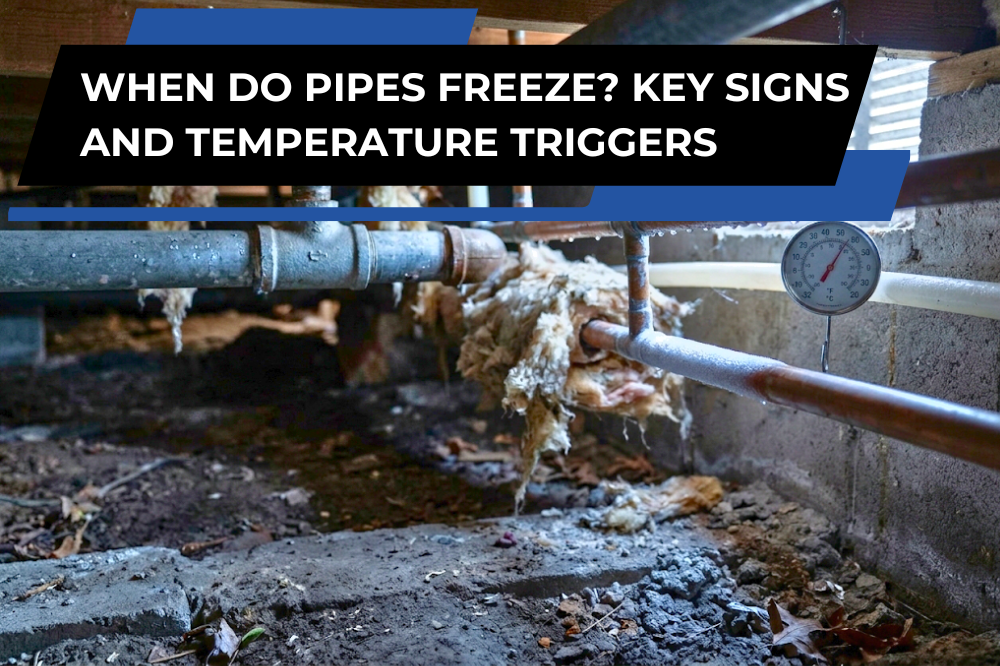
When Do Pipes Freeze? It is a question worth asking before a cold snap leaves you with a dry faucet and a growing repair bill.
For homeowners in Toronto and the GTA, the answer depends on more than the number on the weather app.
Water can freeze at 0°C, but outdoor temperatures alone cannot tell you what is happening inside your plumbing.
Instead, the temperature around the pipe, the length of exposure, and access to indoor heat all influence the risk.
Fortunately, you can spot vulnerable areas and take action before a small problem becomes water damage.
Here is how to assess your home, recognize trouble, and decide when to contact a plumber.
When Should Cold Weather Concern You?
Start paying attention when temperatures fall below freezing, especially if you already know about exposed plumbing or drafty rooms.
However, a freezing forecast does not mean every pipe in your house will develop ice.
Think about two kitchens on the same street.
One has supply lines inside a warm interior wall.
The other has plumbing behind a closed cabinet against a poorly insulated exterior wall.
Although both homes experience the same weather, their pipes can face very different conditions.
As a result, your home’s weak spots matter more than a single outdoor temperature threshold.
Be especially alert during prolonged cold, sudden heating failures, or a repeat of conditions that caused trouble before.
Can One Cold Night Cause Trouble?
Yes, a vulnerable section can freeze during one cold night if it loses enough heat.
However, there is no reliable countdown that applies to every home.
Pipe size, insulation, surrounding air temperature, and water movement affect how quickly conditions change.
Therefore, avoid relying on claims that plumbing is safe until a particular temperature or number of hours.
Instead, check exposed areas before bed when severe cold is expected.
If a room already feels unusually chilly, investigate the cause while water still flows normally.
What Changes During a Power Outage?
A power outage can interrupt your heating system, allowing rooms and concealed spaces to cool.
Consequently, plumbing that normally benefits from indoor warmth may become vulnerable.
Monitor the indoor temperature and contact your heating service provider when needed.
Meanwhile, identify the main water shutoff so you can respond quickly if a leak develops.
Never use a barbecue, outdoor heater, or other unsuitable combustion appliance to warm the house.
Start With the Most Exposed Areas
You do not need to inspect every inch of plumbing to make a useful start.
Instead, focus on places where cold air reaches supply lines or indoor heat struggles to reach them.
Unheated Rooms and Drafty Corners
Check accessible plumbing in garages, attics, crawl spaces, and poorly heated basement areas.
Also, inspect the area where the water supply enters through the foundation.
Look for gaps that let cold air blow directly onto a pipe.
For example, an opening around a utility penetration can create a much colder pocket than the room thermostat suggests.
Exterior Walls and Closed Cabinets
A sink against an outside wall deserves attention, particularly if the cabinet beneath it feels cold.
Because closed doors restrict room air circulation, the space around its supply lines can stay chilly.
New construction does not eliminate this risk. Likewise, an older home does not automatically have unsafe plumbing.
Pipe placement, insulation, drafts, and heating conditions provide more useful clues than the home’s age alone.
Outdoor Faucets and Hose Connections
Outdoor plumbing needs preparation before winter arrives. First, disconnect garden hoses.
Then, follow the correct shutoff and draining procedure for your faucet arrangement.
Even a frost-resistant faucet depends on proper installation and drainage.
Therefore, ask a plumber for help if you cannot identify the setup or w3ter remains trapped in the line.
Recognize the Early Warning Signs
A sudden change in water flow during cold weather deserves prompt attention.
However, reduced pressure has several possible causes, so check the pattern before assuming ice is responsible.
Watch for these warning signs:
- An affected faucet produces only a trickle or no water.
- One fixture loses flow while nearby fixtures work normally.
- An accessible supply line has visible frost.
- A pipe looks swollen, cracked, or otherwise damaged.
- Water appears around plumbing after temperatures begin rising.
Next, compare hot and cold flow at the affected fixture.
Also, check another faucet elsewhere in the house.
These observations can help a plumber narrow down the problem.
If every fixture loses water, check for a reported utility interruption as well.
In Toronto, you can contact 311 about a suspected frozen water service.
Elsewhere in the GTA, contact your local water utility for its process.
Meanwhile, avoid forcing stiff valves or taking fixtures apart.
A careful description of the symptoms is more useful than an improvised repair that creates another problem.
Why Ice Can Lead to a Burst Line
Water expands as it freezes. Inside a supply line, ice formation can also trap water and create damaging pressure.
As a result, a frozen section can lead to a split pipe or failed connection.
However, freezing does not always cause a burst.
The outcome depends on the conditions and the plumbing involved.
A leak may stay hidden while ice blocks the damaged area.
Then, as the blockage melts, water can escape through the opening.
Therefore, restored flow is a reason to inspect carefully rather than assume the problem has passed.
What to Do When Water Stops Flowing
Act calmly and check for damage first.
Although restoring water matters, preventing a larger leak should guide your next move.
1. Check for Leaks and Find the Shutoff
Look for spraying water, damp surfaces, ceiling stains, or a visibly split pipe.
If you find an active leak or suspect a burst, close the main water supply if you can reach it safely and call a plumber.
However, stay out of standing water near outlets, appliances, or electrical panels.
Seek emergency help if water creates an electrical hazard.
2. Decide Whether You Can Safely Reach the Area
You may be able to gently warm an accessible, apparently intact pipe.
However, concealed plumbing, damaged sections, and unsafe crawl spaces call for professional help.
Do not cut into walls simply to search for ice.
Instead, tell the plumber which fixtures have lost flow and where you noticed cold spots or dampness.
3. Apply Gentle Warmth With Care
For an accessible pipe without signs of damage, open the affected faucet and gently warm the suspected area.
Warm towels offer a simple starting point.
Alternatively, a hair dryer may help where the surrounding area is completely dry and electrical use is safe.
Keep electrical equipment away from water and follow its instructions.
Also, remain present throughout the process.
Never use a blowtorch, open flame, or boiling water.
If you cannot locate the blockage or gentle warming does not restore flow, stop and contact a plumber.
4. Inspect as Flow Returns
Watch the warmed area for drips and check nearby surfaces for moisture.
Also, listen for unexpected running water behind walls.
If you closed the supply because of suspected damage, have the problem assessed before restoring pressure.
Otherwise, an unseen split could release water as soon as the blockage clears.
Know When to Call for Professional Help
Contact an emergency plumber when water is escaping, a pipe looks damaged, or you suspect a leak inside a wall.
Similarly, seek help when the affected section is inaccessible or you cannot safely operate the shutoff.
Repeated winter blockages also deserve attention, even if you have managed to restore flow each time.
Otherwise, the underlying exposure problem remains ready for the next cold spell.
A plumber can assess pipe routing, cold air entry, and repair needs.
From there, you can choose improvements that address the cause rather than repeatedly treating the symptoms.
Build a Practical Winter Prevention Plan
Prevention works best when you combine reliable heat, controlled drafts, and suitable protection.
Therefore, tackle the obvious weak spots before severe weather arrives.
Maintain Heat and Air Circulation
Keep indoor temperatures consistent during severe cold.
In addition, open sink cabinet doors where vulnerable plumbing needs access to warmer room air.
Move cleaning chemicals beyond the reach of children and pets first.
Keep garage doors closed if supply lines run through the garage.
However, remember that a comfortable living room does not prove every concealed pipe stays warm.
Insulate and Address Drafts
Fit suitable insulation around accessible supply lines in cold areas, and address nearby air leaks.
However, avoid blocking required ventilation or sealing around equipment without appropriate guidance.
Insulation slows heat loss; it does not create warmth.
Consequently, a pipe in a space that stays below freezing may need more protection.
For recurring trouble, ask about approved heat cable or relocating the vulnerable section.
Any heat cable must suit the pipe material and follow the manufacturer’s installation requirements.
Prepare Before You Travel
Keep the heating system operating and arrange regular property checks during winter absences.
Additionally, consider temperature and leak alerts so someone can respond if conditions change.
Before an extended trip, discuss a suitable water shutoff and draining plan with a plumber.
Homes with boilers, fire sprinklers, or other water-dependent systems need particular care.
Simply opening a faucet may leave water trapped elsewhere.
Questions Homeowners Often Ask
Should I Leave a Faucet Running?
A small flow can help protect certain vulnerable lines during extreme cold.
However, it does not guarantee protection or replace adequate heat.
Follow your local utility’s advice and confirm which fixture serves the affected section.
Also, keep its drain clear and account for the water used.
Can the Hot Water Supply Develop Ice Too?
Yes. Water in a hot supply line cools when nobody uses it.
Consequently, both hot and cold lines need protection where they pass through vulnerable areas.
Will the Blockage Clear Without Help?
Warmer conditions may melt the ice.
However, waiting without checking for damage can allow an unnoticed leak to spread.
If flow stops during cold weather, investigate promptly and arrange help when you cannot safely assess the situation.
Does One Problem Mean Replacing Everything?
Usually, the next step is to assess the affected area and identify why it became cold.
A localized repair or protection improvement may be enough.
However, a plumber should check for damage before recommending the right scope of work.
Frozen Pipe Repair and Prevention With True Service Plumbing
Cold weather can turn a vulnerable supply line into a stressful plumbing problem.
Fortunately, True Service Plumbing helps residential and commercial customers across Toronto and the GTA with plumbing repairs, leak concerns, and preventative maintenance.
Noticed weak water flow, a suspected blockage, or recurring winter trouble?
Contact our team for guidance and assistance with your property’s plumbing.
Protect your home before the next cold snap.
Contact True Service Plumbing today to discuss frozen pipe concerns, repair needs, or practical ways to prepare your plumbing for winter.