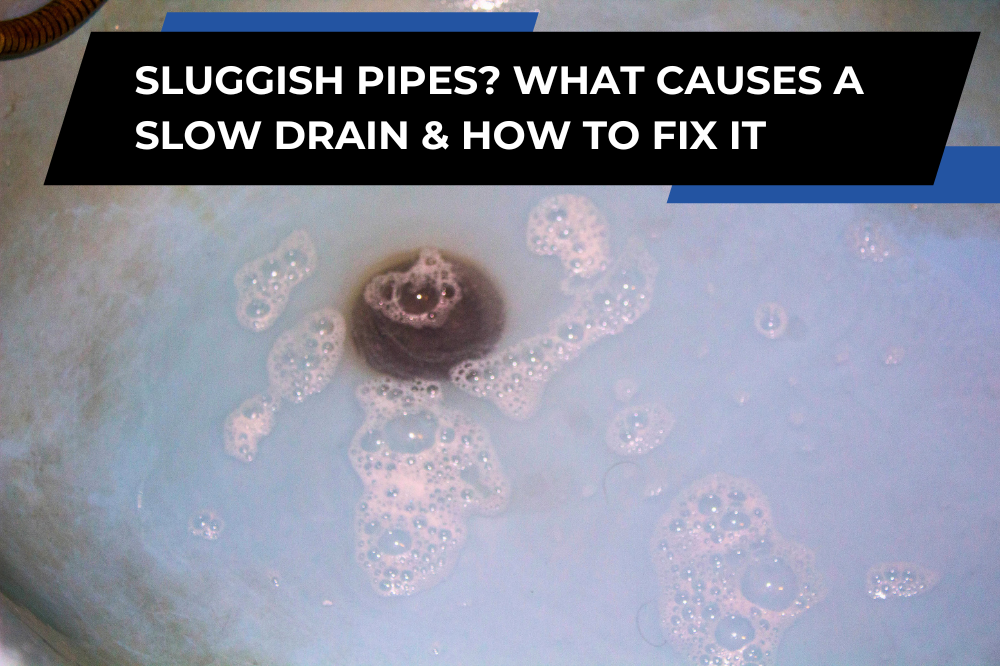
Understanding what causes a slow drain can help you catch a plumbing problem before water backs up into your home.
Sometimes, hair caught around a stopper restricts the flow.
Other times, the trouble sits farther inside a shared drain or underground sewer pipe.
You notice the signs during ordinary routines.
Your shower starts collecting water, or your kitchen sink takes longer to empty after dinner.
At first, the delay seems easy to ignore. However, slow drainage deserves a closer look, especially when it keeps returning.
Here is how to recognize common problems, choose a safe next step, and know when to get professional help.
Start With What You Can See
Before reaching for a tool, check which fixtures have trouble.
This simple observation helps narrow the search.
One Fixture Has Trouble
If only your bathroom sink drains poorly, the restriction may sit around the stopper, inside the curved trap underneath, or farther along that fixture’s drainpipe.
Similarly, an isolated shower problem often involves hair and residue near the opening.
Check accessible areas first, but remember that a clean drain cover does not rule out a deeper clog.
Several Fixtures React Together
If your sink, bathtub, and toilet develop problems together, they may share an affected pipe.
For example, water appearing in the bathtub when you flush the toilet can indicate a restriction downstream of both fixtures.
However, several affected drains do not automatically prove that your entire sewer line needs replacement.
A plumber must locate the problem before recommending a solution.
Wastewater Appears Downstairs
Water backing up through a basement floor drain or another low fixture needs prompt attention.
Because wastewater can escape through the lowest available opening, the visible backup may occur far from the obstruction.
Stop using connected fixtures and water-using appliances while you arrange help.
Also, keep people and pets away from contaminated water.
Everyday Materials That Build Up Inside Pipes
Many drainage restrictions develop gradually.
Small amounts of debris collect over time until water has less room to pass.
Hair and Soap Residue
Hair can catch around stoppers, drain fittings, and existing debris.
Meanwhile, soap residue and body oils can collect with it, forming a stubborn mass.
As a result, a shower may drain normally at the start of your routine, then begin pooling water as the flow exceeds what the restricted opening can handle.
Bathroom sinks can develop similar problems.
Therefore, removing visible hair regularly can help keep accessible fittings clear.
Cooking Grease and Food Scraps
Cooking fats and oily residue can coat the inside of kitchen drainpipes.
As grease cools and accumulates, other debris can stick to it.
For example, rinsing a greasy frying pan can send fat into the plumbing even when you never pour a full container down the sink.
Running hot water afterward does not prevent buildup farther along the pipe.
Instead, let cooking grease cool and collect it for disposal under your municipality’s waste rules.
Wipe oily cookware before washing, and keep food scraps out of the drain.
Wipes and Other Unwanted Objects
Wipes, paper towels, dental floss, and hygiene products can catch inside plumbing and contribute to blockages.
Even wipes labelled “flushable” can create problems.
Unlike a gradual buildup, a dropped object may cause trouble suddenly.
For instance, a small cap or piece of packaging can lodge in a fitting and trap additional debris.
If you can see an object at the opening, remove it carefully without pushing it deeper.
Otherwise, leave retrieval to a plumber.
Problems Beyond an Ordinary Clog
If you are investigating what causes a slow drain that keeps returning, consider whether clearing debris has left an underlying issue unresolved.
Roots Entering Underground Pipes
Tree roots can enter underground sewer pipes through existing cracks, openings, or defective joints.
Once inside, they can grow and catch material moving through the line.
Consequently, clearing a root blockage may restore flow without correcting the entry point.
A plumber may recommend further inspection to assess the pipe and discuss repair options.
However, a nearby tree alone does not establish that roots caused your drainage problem.
Damaged or Uneven Drainpipes
A displaced joint, deteriorated section, or sagging pipe can interfere with wastewater movement.
In a sagging section, water and debris may collect instead of travelling freely toward the sewer.
Over time, this can encourage repeat blockages.
Nevertheless, the age of your home cannot confirm the condition of a specific pipe.
An inspection provides better evidence than guessing.
Depending on the findings, the appropriate solution may involve cleaning, a targeted repair, or more extensive work.
Venting and Installation Issues
Plumbing vents allow air movement and help protect the water seals in fixture traps.
A vent obstruction or an unsuitable drainage layout can affect how fixtures are empty.
However, gurgling does not identify a vent problem by itself.
A partial clog can also create unusual sounds.
Therefore, avoid climbing onto the roof or changing pipework based on noise alone.
Have a plumber assess persistent symptoms and the system’s layout.
Warning Signs You Should Act On
A single sluggish sink may allow time for a basic check.
However, recurring or spreading symptoms deserve professional attention.
Watch for these changes:
- Water drains poorly again soon after you clear it.
- More than one fixture develops problems.
- Using one fixture pushes water into another.
- Persistent odours accompany drainage trouble.
- Gurgling repeatedly occurs during normal use.
- Wastewater rises in a tub, shower, or floor drain.
Together, these details help a plumber investigate the location and severity of the problem.
No single symptom confirms the exact cause.
Also, notice when the trouble started.
A sudden change after an object disappeared down the sink provides a different clue than months of gradually worsening flow.
Safe Steps to Try at Home
For an isolated, minor restriction, a careful first attempt may improve drainage.
Start with the simplest accessible check.
Remove Visible Debris
Wear gloves and inspect the strainer or stopper.
If the stopper removes easily according to its design, lift it out and remove collected hair and residue.
Next, clean the accessible parts and reinstall them securely.
Avoid forcing unfamiliar mechanisms or reaching blindly into the opening.
If drainage improves, monitor the fixture over the next several uses.
Temporary improvement followed by another slowdown suggests that something remains unresolved.
Try a Suitable Plunger
A sink plunger may help loosen a minor local obstruction.
Use enough water to cover the cup and create a seal; on an appropriate sink, covering the overflow opening can help maintain pressure.
Then, use controlled plunging movements.
Stop if you notice leaking, water rising elsewhere, or no meaningful improvement.
However, do not plunge a drain that contains chemical cleaner.
Splashing can expose your skin and eyes to hazardous liquid.
Know When to Stop
Repeated attempts can waste time while the restriction remains in place.
Therefore, stop when basic cleaning fails or the problem affects other fixtures.
Avoid these common mistakes:
- Mixing drain cleaners with other chemicals.
- Repeatedly adding chemical products to standing water.
- Forcing a drain snake past resistance.
- Treating boiling water as a universal fix.
- Assuming fizzing baking soda and vinegar will remove a substantial clog.
If you have already used a chemical cleaner, tell the plumber what product you used and when.
This information helps them handle the drain safely.
When to Call a Plumber
Call a plumber when the same problem returns, multiple fixtures react together, or simple cleaning does not restore normal drainage.
For an active sewage backup, stop adding water to the system and seek urgent assistance.
In Toronto, you can also contact 311 for guidance about a suspected sewer backup and the City’s assessment process.
Elsewhere in the GTA, check your municipality’s reporting procedure.
Before booking service, gather a few useful details:
- Which fixtures have trouble.
- When you first noticed the symptoms.
- Whether another fixture causes water to rise.
- What cleaning methods or products you tried.
- Whether the property has a history of similar problems.
In a condo or shared building, notify property management as well.
Responsibility for shared plumbing depends on the building and the affected pipe.
How Professionals Diagnose and Resolve the Problem
A plumber starts by reviewing symptoms and inspecting the affected fixtures.
From there, they can choose an appropriate clearing or investigation method.
For example, professional snaking can remove certain obstructions and restore flow.
More thorough cleaning may help where deposits remain along the pipe walls.
Hydro jetting uses pressurized water to clean suitable drain lines.
However, the plumber should assess the pipe’s condition and the blockage before choosing this method.
A camera inspection may help investigate recurring trouble, suspected roots, or pipe defects.
Still, not every isolated clog requires a camera, and heavy debris or standing water can limit visibility.
Ultimately, the findings should guide the recommendation.
Clearing a blockage addresses the obstruction; repairing a defective pipe addresses the physical problem that may keep bringing it back.
Habits That Help Keep Water Moving
Prevention starts with what enters your plumbing.
Although good habits cannot repair damaged pipes, they can reduce avoidable buildup.
Try these practical changes:
- Fit suitable strainers over shower and sink openings.
- Empty collected hair and debris regularly.
- Keep cooking grease and food scraps out of kitchen drains.
- Flush only human waste and toilet paper.
- Clean accessible stoppers before residue accumulates.
- Investigate repeat symptoms instead of repeatedly treating them.
Additionally, tailor maintenance to your home’s history.
A property with known root intrusion may need a different approach than one with occasional hair around a shower stopper.
Ask your plumber what schedule makes sense for your pipes.
There is no single cleaning interval that suits every home.
Frequently Asked Questions
Can Water Still Flow Through a Partial Blockage?
Yes. A partial obstruction leaves some space for water to pass, which explains why a fixture may empty slowly instead of backing up completely.
However, continued use can add more debris.
Addressing the change early helps you avoid waiting for a complete blockage.
Why Does the Problem Return After Cleaning?
You may have removed only part of the buildup or opened a narrow path through it.
Alternatively, roots, pipe damage, or an installation issue may remain.
Therefore, recurring trouble deserves an assessment rather than another round of the same temporary treatment.
Does Poor Drainage Mean I Need New Pipes?
No. Many restrictions involve removable debris, and the appropriate solution depends on the findings.
However, confirmed defects may need repair.
Ask the plumber to explain the evidence and how the proposed work addresses the problem.
Drain Cleaning and Repair Services With True Service Plumbing
Understanding what causes a slow drain gives you a useful starting point.
When the problem persists, professional diagnosis can help you choose the right next step.
For drain cleaning and plumbing repairs in Toronto and the surrounding GTA, True Service Plumbing helps residential and commercial customers address troublesome blockages and recurring drainage issues.
Dealing with standing water, gurgling fixtures, or a drain that keeps clogging?
Contact True Service Plumbing for more information or to arrange an assessment.
If wastewater is actively backing up, reach out for emergency plumbing assistance.