
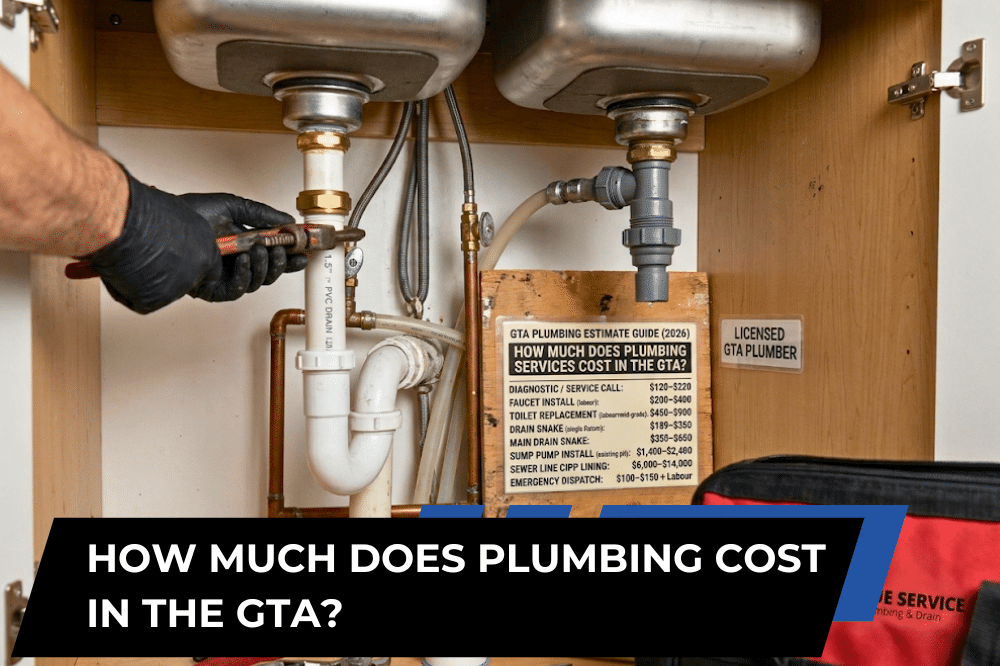
Understanding plumbing cost Toronto estimates start with knowing what the job includes, how the plumber charges, and what could change the final bill.
A dripping faucet may need one replacement part. Meanwhile, a recurring basement drain backup may require a camera inspection and a more involved repair.
Both need attention, but they involve very different amounts of work.
So, how much should you budget?
Many straightforward repairs can involve a few hundred dollars, while projects requiring excavation or extensive pipe replacement can reach several thousand.
However, a useful estimate goes beyond the headline number.
This guide explains common charges, what affects your bill, and how to compare your options before approving work.
What Should You Budget for Common Plumbing Jobs?
Start by identifying the service you need. Then ask what the estimate covers, including labour, parts, diagnostic work, and cleanup.
The following amounts are general planning allowances in Canadian dollars, before applicable taxes.
They are illustrative estimates, not verified market averages or advertised True Service Plumbing prices.
Actual quotes may fall outside these ranges.
| Service | General planning allowance | Scope to confirm |
| Service call or initial diagnosis | $100–$250 | Whether repair labour is included or billed separately |
| Minor faucet or toilet repair | $150–$450 | Standard parts, access, and extent of damage |
| Straightforward fixture drain clearing | $150–$400 | One accessible drain and the clearing method |
| Basic toilet replacement labour | $250–$500 | Fixture, disposal, flange repairs, and supply connection |
| Accessible water pipe leak repair | $200–$700 | Pipe material, isolation, and amount of replacement |
| Sewer camera inspection | $200–$500 | Access, recording, and whether clearing is separate |
| Main sewer drain clearing | $300–$800 | Access, blockage severity, and equipment required |
For example, installing a customer-supplied toilet on a sound flange differs from replacing a toilet above a damaged floor.
Consequently, the same service name can describe very different projects.
Also, avoid adding every allowance together automatically.
Some companies bundle diagnosis and repair, while others list separate charges. Ask for the expected total for your specific job.
For sump pumps, backwater valves, underground repairs, and major replacements, request a site assessment.
These projects have enough variables that a generic starting price can create the wrong expectation.
How Do Plumbers Charge?
Service Calls and Diagnostic Fees
A service call may cover travel and attendance. A diagnostic fee may cover time spent investigating the problem.
However, each company defines these charges differently.
Before booking, ask whether you pay the fee if you decline the repair. Also, ask whether the company applies it toward approved work.
An upfront explanation helps you understand the minimum financial commitment before anyone arrives.
Hourly Rates and Flat-Rate Quotes
With hourly pricing, the bill usually reflects labour time plus materials and other agreed charges.
Therefore, ask about minimum billable time and how the company bills additional increments.
With flat-rate pricing, you receive a price for a defined task. However, that price only helps if the scope is clear.
For instance, a quote to replace a faucet should explain whether it includes removing the old fixture and reconnecting the water supplies.
It should also explain what happens if damaged shutoff valves prevent a straightforward installation.
Ultimately, compare the expected completed job cost rather than judging value by the hourly rate alone.
Emergency and After-Hours Pricing
Urgent dispatch, late appointments, weekends, or holidays may carry extra charges.
Nevertheless, policies vary, so confirm the amount before booking whenever possible.
Ask whether the emergency appointment covers stopping the immediate problem, completing the permanent repair, or both.
Sometimes a plumber must first control the leak and return with the necessary parts.
What Makes One Repair More Expensive Than Another?
Access to the Problem
An exposed pipe under a sink usually takes less effort to reach than a pipe inside a finished wall.
Similarly, an underground sewer repair may involve excavation and surface restoration.
As a result, access can account for a substantial share of the project.
Ask who opens the area and who restores drywall, flooring, landscaping, or concrete afterward.
The Underlying Cause
A slow drain may involve a local buildup. However, recurring backups can point to a problem farther along the system.
Clearing a blockage and correcting a damaged pipe are separate scopes of work.
Therefore, ask what the proposed service will resolve and whether the plumber recommends further investigation.
This distinction helps you avoid paying repeatedly for temporary relief without understanding the cause.
Materials and Existing Conditions
Standard replacement parts may be readily available. In contrast, specialty fixtures or discontinued components can require extra sourcing and labour.
Older plumbing may also complicate the repair. For example, a corroded connection can require replacement beyond the section that initially leaked.
Before work starts, agree on how the plumber will explain and price any additional work. You should understand the revised scope before approving it.
Building Access and Project Requirements
Parking, building access, elevator bookings, and coordinated water shutdowns may affect scheduling and labour.
Consequently, tell the company about these conditions when you book.
For larger projects, ask whether permits or inspections apply and who will handle them.
Also, confirm whether those expenses appear in the estimate.
How to Compare Quotes Without Missing Important Details
Two estimates can look similar while covering different work. Therefore, use a written scope to compare them fairly.
Look for these details:
- The problem the plumber identified.
- The work and materials included.
- Labour pricing or the agreed flat rate.
- Service call and diagnostic charges.
- Applicable taxes and payment terms.
- Cleanup, disposal, and restoration responsibilities.
- Warranty coverage and exclusions.
- The process for approving extra work.
Next, check whether each quote addresses the same cause. A drain-clearing quote cannot meaningfully compete with a quote to excavate and replace a broken sewer section.
For planned, substantial work, getting more than one estimate can help you understand the options.
However, an active leak may require immediate damage control before you compare permanent repair proposals.
Finally, ask who will complete the work and confirm the contractor’s relevant qualifications and insurance.
Clear answers should support your decision alongside the price.
Should You Repair or Replace the Fixture?
A small component failure does not automatically justify replacing the entire fixture.
For example, replacing a worn toilet flapper may solve a running toilet when the remaining components are sound.
However, repeated failures can change the calculation.
Add up the likely repair costs, consider the condition of the fixture, and ask whether replacement would resolve recurring concerns.
Useful questions include:
- Is the problem limited to one replaceable component?
- Are suitable parts available?
- Has the fixture needed several recent repairs?
- Would replacement require additional plumbing changes?
- What warranty applies to each option?
Then compare the installed replacement price with the proposed repair.
A fixture’s retail price alone leaves out labour, connections, disposal, and any necessary adjustments.
When Does a Plumbing Problem Need Urgent Attention?
An uncontrolled leak, burst pipe, or sewage backup can cause damage while you wait.
Therefore, treat active flooding or wastewater entering the home as urgent.
If you can safely reach the appropriate water shutoff, close it to limit a supply leak.
However, avoid standing water near electrical equipment and keep people away from sewage.
Also, stop using affected fixtures when drainage problems cause wastewater to back up. Adding more water may worsen the situation.
A slow drip that you can safely isolate may suit a scheduled visit. Nevertheless, describe the symptoms when booking so the plumbing company can help assess the urgency.
How Can You Keep Plumbing Expenses Manageable?
Act on Early Warning Signs
Persistent moisture, repeated clogs, and unexplained changes in fixture performance deserve attention.
Although they do not always indicate a major problem, investigating them can help you plan the next step.
Likewise, keep records of previous repairs. A short history can help the plumber understand what keeps happening.
Make the Appointment Easier to Complete
Clear the area around the affected fixture before the visit. Also, provide building access instructions and explain any restrictions when booking.
Describe when the problem started, what triggers it, and what you have already tried. If requested, send photos of the fixture and accessible connections.
In addition, mention other nonurgent issues in advance. The company can then schedule enough time and explain whether combining tasks affects the total charge.
Plan Maintenance Around Your Home
Follow equipment maintenance instructions and keep grease, wipes, and unsuitable waste out of drains. Meanwhile, check exposed connections occasionally for drips or staining.
If your home has a sump pump, follow its testing and maintenance guidance. Also, ask about known concerns during routine service visits.
Rather than relying on one universal annual budget, consider your home’s condition and repair history. Set aside funds for unexpected work and prioritize existing problems first.
Frequently Asked Questions
Can I Get an Accurate Price Over the Phone?
A company may provide a preliminary range when the scope is familiar. However, hidden damage, access problems, and uncertain causes can prevent a firm quote until inspection.
Ask what the phone estimate assumes and which findings could change it.
Will I Pay If I Decline the Repair?
Possibly. A disclosed attendance or diagnostic fee may still apply even if you choose not to proceed. Therefore, confirm the booking terms beforehand.
Can I Supply My Own Fixture?
Some plumbers install customer-supplied fixtures, but policies vary.
Before buying, confirm compatibility and ask how product defects or missing parts affect installation charges and warranty coverage.
Who Pays for a Condo Plumbing Repair?
Responsibility depends on the affected plumbing and the condominiums’ governing documents.
Consequently, contact management to confirm responsibility and any approval or access requirements before arranging nonurgent work.
Plumbing Repairs and Installations with True Service Plumbing
When you need help understanding a repair estimate or planning plumbing work, True Service Plumbing serves residential and commercial customers throughout Toronto and the surrounding GTA.
Whether you are dealing with a leaking fixture, a blocked drain, or an installation project, contact our team to discuss the symptoms and arrange an assessment.
We can help you understand the proposed work and the factors that affect your estimate.
Have a plumbing concern or need urgent assistance?
Contact True Service Plumbing today for information about service options and scheduling.
Take the next step toward resolving the problem with a clear understanding of the work involved.