
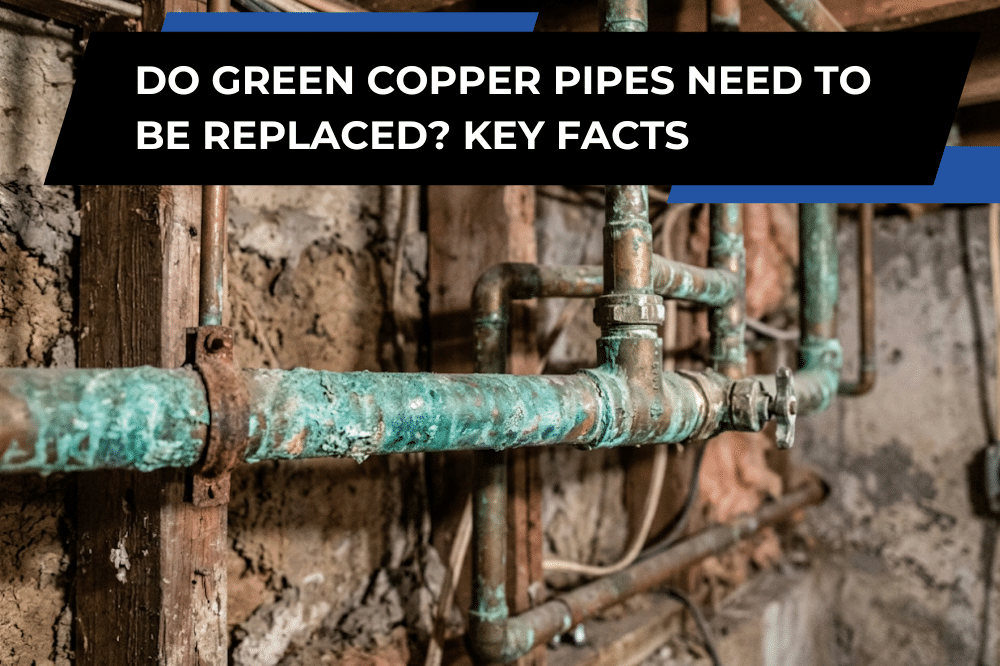
Do green copper pipes need to be replaced? Not always. You might notice a blue-green patch beneath the kitchen sink or a dusty deposit on a pipe in your basement.
Naturally, your first thought may be that the plumbing is failing. However, colour alone cannot tell you whether a pipe is safe, leaking, or ready for replacement.
Sometimes, the green appearance comes from surface reactions that develop over time. In other cases, it points to moisture, installation residue, or corrosion that deserves attention.
The key is knowing what to look for and when to call a plumber. Here’s how to make that decision without replacing perfectly usable plumbing.
The Short Answer: Colour Alone Isn’t a Replacement Test
A dry, stable patch of discoloration does not automatically mean you need new pipes. Copper can change colour as it reacts with substances in its surroundings.
However, a wet joint, recurring green crust, or an actual pinhole leak tells a different story.
As a practical rule, consider three situations:
- Monitor: The surface is dry, the deposit is unchanged, and there are no other signs of trouble.
- Arrange an inspection: Green buildup appears around a fitting, returns after cleaning, or comes with dampness or staining.
- Repair promptly: Water is dripping, the metal is visibly damaged, or leaks keep occurring.
Ultimately, a plumber should assess the condition of the pipe, not just its colour.
That distinction can save you from unnecessary work while helping you catch genuine problems early.
Why Does Copper Plumbing Turn Green?
Copper starts with a familiar reddish-brown appearance. Over time, oxygen, moisture, and other substances can react with its surface.
The resulting compounds may look brown, dark, green, or blue-green. People often call this surface change a patina.
However, not every green mark has the same cause.
Where it appears and whether the area stays wet can tell you more than the colour itself.
Ordinary Surface Discoloration
On exposed metal, a thin layer of surface compounds can form gradually.
If the piping stays dry and performs normally, the appearance may be largely cosmetic.
Still, a homeowner cannot confirm the remaining pipe thickness by looking at the outside.
For that reason, monitor unfamiliar deposits instead of assuming they are either harmless or dangerous.
Condensation and Small Leaks
Cold-water lines can collect condensation in humid spaces.
Likewise, a slow leak near a valve or fitting may keep the surrounding copper damp.
Repeated moisture can leave visible deposits as water evaporates.
If a green patch feels wet or nearby wood shows staining, investigate the moisture source.
Even a tiny drip can damage cabinets, drywall, or flooring over time.
Flux Residue and Other Corrosive Conditions
Plumbers use flux when soldering certain copper fittings. If excess residue remains, it can contribute to localized corrosion.
In addition, contact with unsuitable chemicals or persistent moisture may affect the pipe’s surface.
Inside the line, water chemistry, flow conditions, and other factors can also influence corrosion.
Consequently, two homes with similar-looking pipes may have very different underlying problems.
Is Green Buildup Dangerous?
The answer depends on what is happening to the pipe and your water.
Green material on the outside does not prove that drinking water contains excess copper.
Likewise, clear water does not rule out elevated copper levels.
Patina Versus Active Corrosion
A dry, thin stain is different from a damp, powdery deposit beside a leaking joint.
More importantly, corrosion can create small pits in the metal.
Over time, those pits may penetrate the pipe wall and form pinhole leaks.
Because the damage can be localized, one badly affected section does not automatically mean every copper line in the house is failing.
However, repeated failures may point to a wider issue that needs investigation.
What About Drinking Water?
Copper can enter tap water when plumbing materials release it into the water.
Health Canada sets a maximum acceptable concentration of 2 milligrams per litre for copper in drinking water and an aesthetic objective of 1 milligram per litre for taste and staining concerns.
For example, blue-green marks in a sink or a metallic taste may justify testing, but neither symptom tells you the actual concentration.
The reliable way to check is through appropriate water sampling and laboratory analysis.
If you are concerned, contact your local municipality or public health authority about testing.
Meanwhile, do not assume that scrubbing the outside of a pipe will change the copper level in your water.
Warning Signs You Should Never Ignore
So, do green copper pipes need to be replaced when you notice buildup near a connection?
Not necessarily. First, look for evidence that the material is deteriorating or water is escaping.
Watch for these warning signs:
- Persistent dampness: A pipe or fitting remains wet even when condensation seems unlikely.
- Active dripping: Water beads or falls from a joint, valve, or straight section of pipe.
- Pinhole leaks: A small opening releases a fine spray or a slow trickle.
- Visible pitting: The surface has tiny cavities, rough spots, or areas that appear eaten away.
- Water damage: Cabinets, drywall, or flooring show stains, swelling, or a musty smell.
- Recurring repairs: More than one copper section has developed leaks over a relatively short period.
- Changes in water flow: Reduced pressure or flow occurs along with other symptoms, although clogs and valve problems can also cause it.
A single green stain is not an emergency by itself. However, an active leak deserves prompt action.
If you can safely reach your home’s main shutoff valve, turn off the water and arrange professional help.
Never disturb a visibly weakened, pressurized joint to see whether it will hold.
How to Check Exposed Pipes Safely
You do not need special tools to make a useful first observation. Instead, start with a flashlight and a careful visual inspection.
Where to Look
Check accessible plumbing beneath sinks, behind service panels, near laundry equipment, around the water heater, and along basement or utility-room lines.
Pay particular attention to valves, soldered connections, and areas with a history of dampness.
A Simple Homeowner Checklist
1. Find the exact spot. Is the green material on a straight pipe, a fitting, or the wall below it?
2. Look for moisture. Check visually for droplets, stains, or water collecting underneath.
3. Compare nearby sections. Is the change isolated, or do several areas look similar?
4. Take a photo. A dated picture makes it easier to notice whether the patch is spreading.
5. Watch for repeat symptoms. New stains, dampness, or pressure changes deserve closer attention.
Importantly, avoid scraping crusty deposits, using strong acidic cleaners, or tightening a questionable fitting.
Those actions can worsen a weak connection. If the area is hard to reach or the cause is unclear, have a licensed plumber inspect it.
Repair or Replace? Choosing the Right Fix
A plumbing inspection should identify the cause before anyone recommends a replacement.
Otherwise, you could pay to replace a visible section while leaving the original problem unresolved.
When Monitoring May Be Enough
If the pipe is dry, sound, and free of leaks, monitoring may be appropriate.
For instance, a plumber may confirm that a small surface stain does not indicate meaningful damage.
You can then photograph the area periodically and keep it accessible for future checks.
Cosmetic cleaning is not a repair. Therefore, do not treat a shiny surface as proof that the pipe underneath is healthy.
When a Local Repair Makes Sense
An isolated leak or deteriorated fitting may only require replacing a short section.
In that case, the plumber can remove the affected material and install a suitable new connection.
This approach often avoids the disruption of replacing plumbing throughout the home.
However, the surrounding copper must also be in acceptable condition.
Repairing one hole in a badly deteriorated line may simply postpone the next leak.
When Larger Replacement Is Worth Considering
Widespread deterioration, repeated pinhole leaks, or multiple failures can make broader replacement the better long-term option.
Additionally, the plumber may recommend checking water chemistry or installation conditions so the same problem does not return.
Depending on the system and applicable requirements, replacement materials may include copper or approved alternatives such as PEX.
The best choice depends on the building, pipe locations, and local plumbing rules.
What Does Copper Pipe Replacement Cost?
There is no single price for repairing a corroded copper line.
A short, accessible section beneath a sink is a different project from opening finished walls to replace multiple water lines.
A quote will typically depend on:
- How much piping needs to be removed.
- Whether the damaged area is easy to access.
- The number of fittings, valves, and connections involved.
- The selected pipe material and installation method.
- Whether walls, ceilings, or other finishes need restoration.
- The cause of corrosion and whether additional testing is needed.
For that reason, request an itemized assessment before approving major work.
Ask what evidence supports replacement and whether a smaller repair is a reasonable option.
A clear explanation matters more than an alarming photograph of a green stain.
How to Help Prevent Future Corrosion
You cannot stop copper from aging. However, you can reduce moisture-related trouble and catch leaks before they spread.
Start with a few practical habits:
- Keep exposed areas dry. Address condensation, poor ventilation, and recurring dampness.
- Fix small leaks early. Even a slow drip can create stains and damage nearby materials.
- Inspect accessible lines. Check beneath sinks and around mechanical equipment a few times a year.
- Use cleaners carefully. Avoid leaving aggressive chemicals on metal pipes and fittings.
- Investigate repeated failures. Ask whether water chemistry, installation practices, or another condition needs attention.
- Keep repair records. Note where leaks occurred so a plumber can spot a pattern.
Most importantly, do not rely on appearance alone. A simple inspection and an explanation of the cause are more useful than repeatedly cleaning the same green patch.
Frequently Asked Questions
Is It Normal for Older Copper Pipes to Turn Green?
Yes, copper can develop green surface compounds as it ages. However, a concentrated or wet deposit can also indicate a problem. Check for moisture and damage rather than judging the pipe by colour alone.
How Long Do Copper Water Pipes Last?
Copper plumbing can serve a home for decades, but there is no guaranteed lifespan. Water conditions, installation quality, pipe type, and maintenance all matter. Consequently, age is only one factor when deciding whether replacement is worthwhile.
Can Corrosion Cause Pinhole Leaks?
Yes. Localized corrosion can eat into the pipe wall until a small hole forms. However, not every green stain means this process is underway. A plumber can inspect suspicious sections and determine whether repair is needed.
Should I Replace Every Pipe if Only One Section Is Green?
Usually, that is not the starting point. First, identify why the affected area changed colour. If the damage is isolated, a local repair may be sufficient. In contrast, multiple leaks or widespread deterioration may justify a broader inspection and replacement plan.
Can I Clean the Green Material Off Myself?
Only consider gentle exterior cleaning after confirming the pipe is dry and in good condition. Never scrape heavy deposits or use harsh chemicals on a questionable joint. More importantly, remember that cleaning does not repair corrosion or stop a leak.
Final Thoughts: Pay Attention to the Signs, Not Just the Colour
The sight of green copper plumbing can be unsettling, especially when you do not know how long the stain has been there.
Fortunately, many situations do not require an immediate overhaul.
The important questions are whether the pipe stays dry, whether the metal shows damage, and whether leaks are becoming a pattern.
If you are still wondering if green copper pipes need to be replaced, let the evidence guide the decision.
A professional inspection can separate ordinary surface changes from problems that call for repair.
As a result, you can protect your home without paying for work you may not need.
Copper Pipe Inspection and Repair Services With True Service Plumbing
When copper piping shows signs of corrosion, True Service Plumbing can help you understand what is happening and what to do next.
Our licensed plumbing professionals serve residential and commercial properties across Toronto and the surrounding GTA, providing leak diagnosis, pipe repairs, and replacement services.
Noticed green buildup, a damp fitting, or recurring leaks?
Contact True Service Plumbing for an inspection and practical advice tailored to your property.
We’ll help you address the cause and keep your plumbing working reliably.